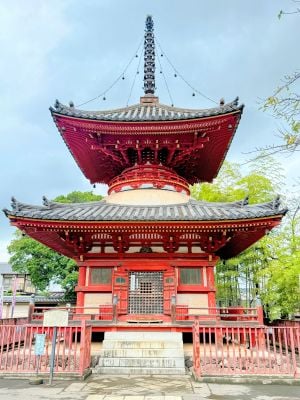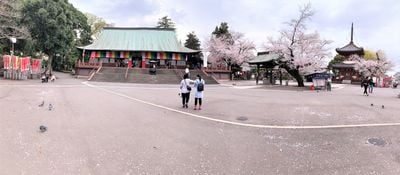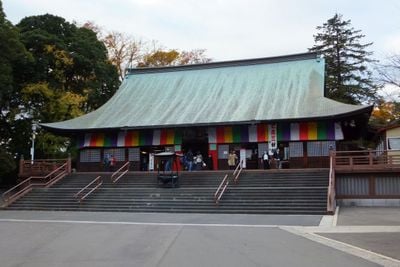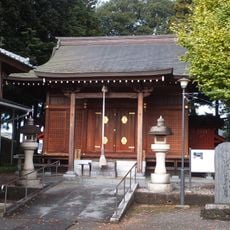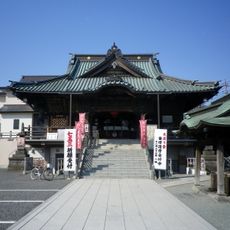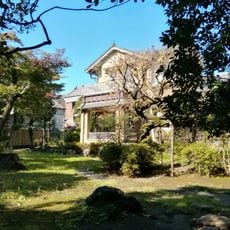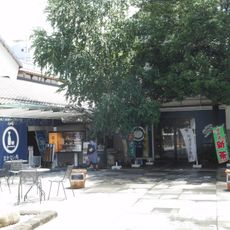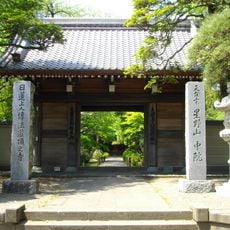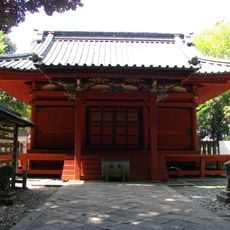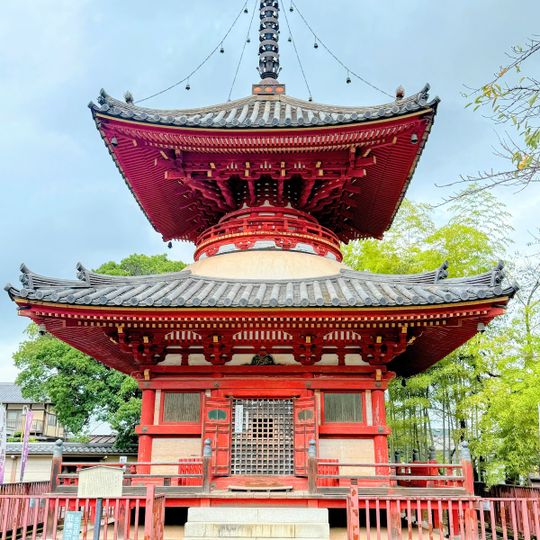
Kita-in Temple, Buddhist temple in Kosenbamachi, Kawagoe, Japan.
Kita-in is a Buddhist temple in Kosenbamachi in Kawagoe belonging to the Tendai school of Japanese Buddhism. The grounds hold several halls, a garden with a pond, and a large collection of stone sculptures spread across different areas.
Monk Ennin founded the temple in 830 under orders from Emperor Junna, establishing it as a center for Buddhist teaching in the Kanto region. A fire in 1638 destroyed most buildings, after which Shogun Iemitsu relocated parts of his castle here to support reconstruction.
The temple is known as Kawagoe Daishi, after Ryogen (Jie Daishi), whose image stands in the Jie-do, also called Choon-den because visitors who sit quietly are said to hear waves. On 3 January the Daruma market fills the grounds, and the temple is the third stop of the Koedo Kawagoe Seven Lucky Gods pilgrimage, where Daikokuten is honoured beside the main hall.
Visitors enter the grounds through a large gate and follow paths to the different halls and sculptures. The rakan statues stand outdoors and are best viewed during daylight when details of faces and clothing are easy to see.
The 540 rakan figures show no two identical faces, and some hold objects like ink brushes or drinking cups in relaxed postures. Sculptors worked for over 40 years on this collection, creating scenes from daily life rather than solemn religious imagery.
The community of curious travelers
AroundUs brings together thousands of curated places, local tips, and hidden gems, enriched daily by 94,252 contributors worldwide.