Kabuki-za, Traditional kabuki theatre in Ginza, Japan
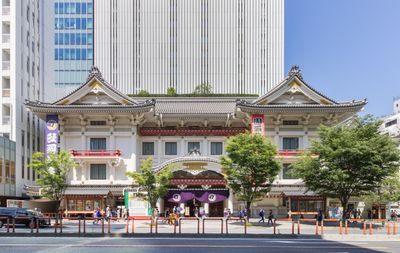
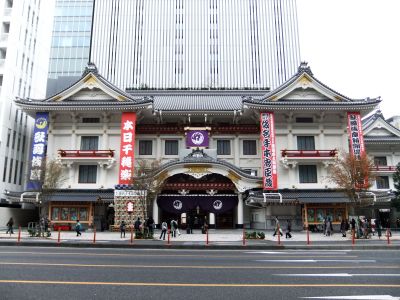
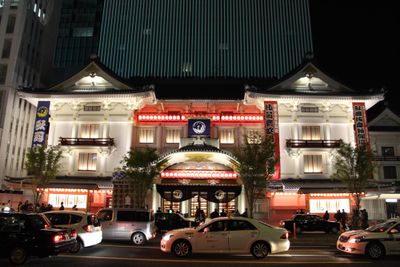
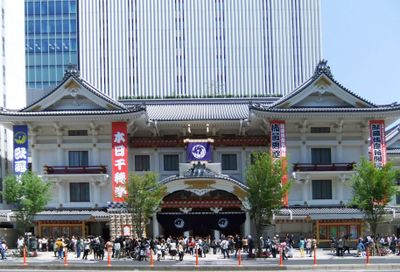
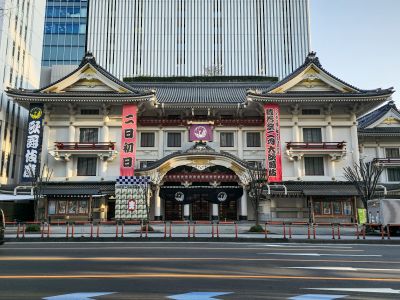
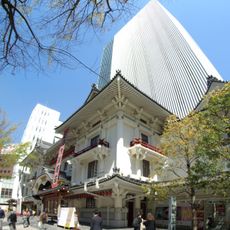
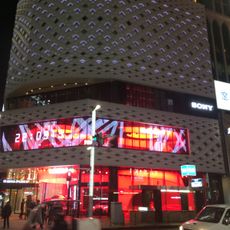
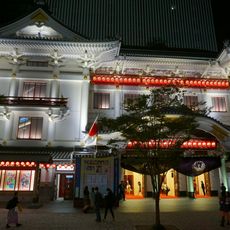
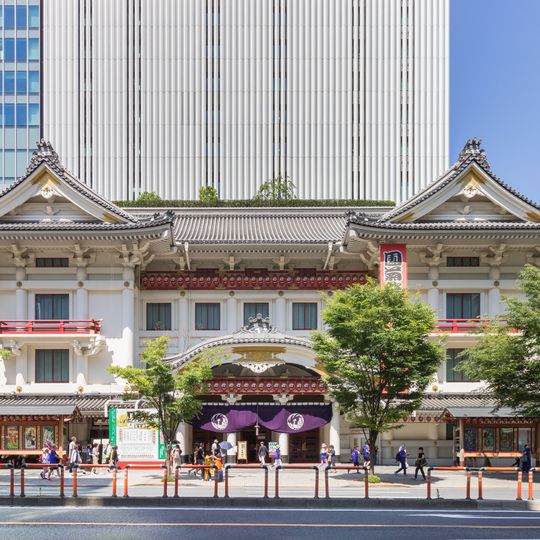
Kabuki-za is a theatre in Ginza, Tokyo, recognized by its facade with multiple tiers, curved rooflines, and a green copper roof. The building blends Western construction techniques with Japanese design elements, forming a clear contrast to the surrounding high-rises.
The theatre opened in 1889 on the initiative of journalist Fukuchi Gen'ichiro, aiming to make kabuki accessible to a wider audience. Following fires, the 1923 earthquake, and wartime damage, it was rebuilt several times, most recently in 2013 with modern safety standards.
The theatre's name combines "kabuki" with "za," a term meaning playhouse that reflects traditional performance spaces where actors and audiences share the same room. During intermissions, many visitors head to the rooftop garden or enjoy bento boxes sold inside, continuing a ritual tied to long performances.
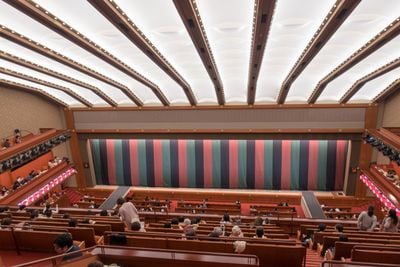
The theatre offers nearly 2,000 seats spread across several tiers, giving visitors different angles on the stage. English subtitles are available via handheld devices, allowing guests without Japanese to follow the storyline.
Stage technicians dressed in black, called kurogo, change scenery and operate special effects directly on stage while the audience traditionally ignores them. A narrow walkway, hanamichi, runs through the seating area to the stage, allowing performers to make dramatic entrances among the spectators.
The community of curious travelers
AroundUs brings together thousands of curated places, local tips, and hidden gems, enriched daily by 92,629 contributors worldwide.