Narita-san, Buddhist temple in Narita, Japan
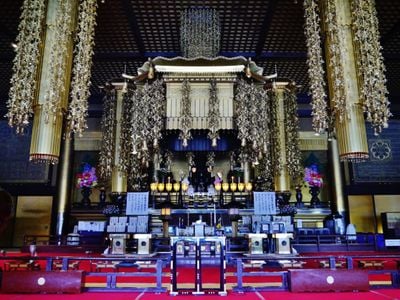
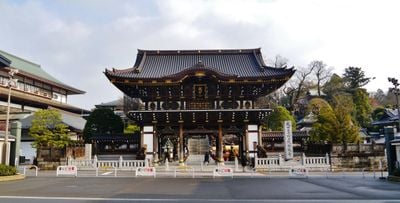
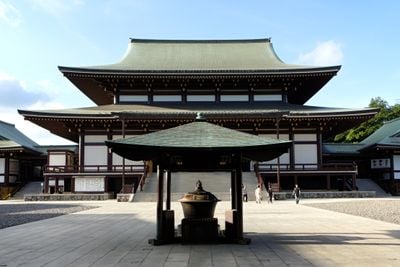
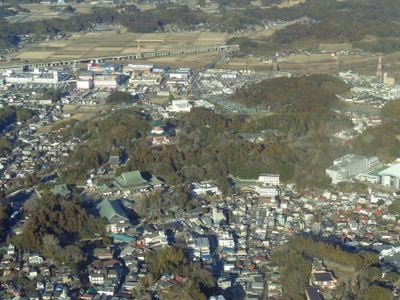
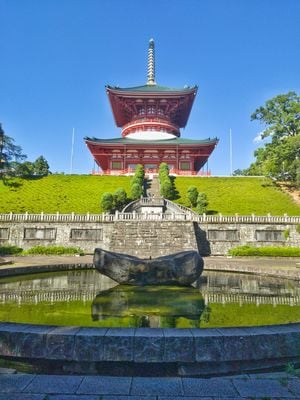
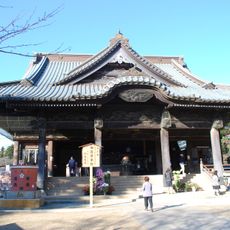
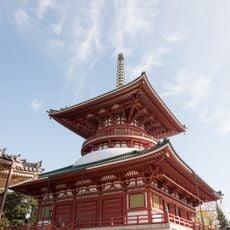
Narita-san is a Shingon Buddhist temple complex in central Narita whose buildings stand on terraced levels linked by stone steps. Its two-storey gate has a curved dark tiled roof, white walls with dark timber framing, gold ornamentation and a gold-covered plaque above a balcony hung with white paper lanterns. Inside the hall, an ornate altar with white sliding panels, golden knobs and rows of small golden lamps surrounds a seated figure.
A monk from Kyoto founded the temple in the 10th century and brought a fire statue meant to be worshipped by pilgrims. The complex gained importance during the Edo period when the shogunate donated land and commissioned new buildings.
The temple's name, Shinshō-ji ("New Victory Temple"), refers to the 940 victory over Taira no Masakado. Kabuki actor Ichikawa Danjūrō I credited Fudō myōō with the birth of his son in 1688, took the stage name "Naritaya", and in 1695 first performed a play on the Narita Fudō, which drew Edo commoners on pilgrimage. Goma fire rituals with wooden amulets are held several times daily.
The complex lies a fifteen-minute walk from the train station and remains open year-round without an admission fee. Steep stairs link the upper sections, so comfortable shoes are recommended for climbing through the grounds.
Three million people flock here during the first three days of January for the new year festival and crowd along the pathways to the main shrine. Vendors line the approach street selling roasted sweet potatoes and warm sake while families purchase good luck charms.
The community of curious travelers
AroundUs brings together thousands of curated places, local tips, and hidden gems, enriched daily by 92,265 contributors worldwide.