Sanbō-in Temple, Buddhist temple in Fushimi-ku, Kyoto, Japan
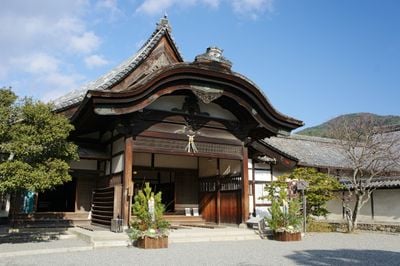
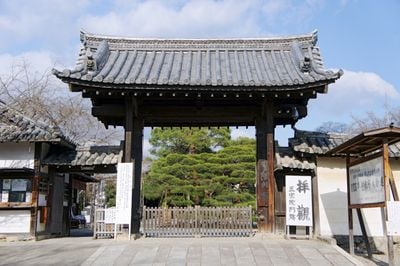
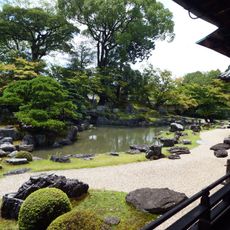
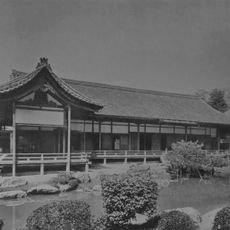
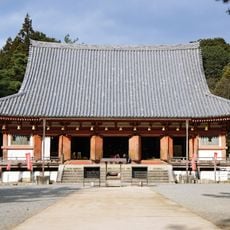
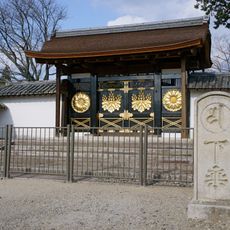
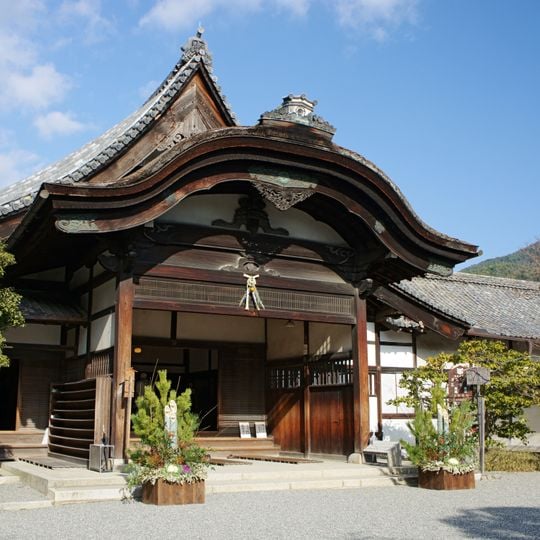
Sanbō-in is a temple in Fushimi-ku with multiple buildings and a spacious garden laid out with hundreds of stones arranged around a central pond. The grounds showcase traditional Japanese architecture and garden design, with carefully arranged elements that form a unified whole.
The temple was founded in 1115 by a high-ranking religious leader who established the site. Later, in the 16th century, it was substantially rebuilt and renewed under the direction of an influential military commander.
The sliding-door and wall paintings in the halls are by Hasegawa Tōhaku's school and by Ishida Yūtei, not the Kanō school. In the omote shoin, the upper and middle rooms carry Tōhaku-school landscapes and the lower room, called the 'agebutai no ma', has Yūtei's paintings; its tatami can be lifted to form a Noh stage. The shinden's upper room holds the Dōgo shelf, counted with the Kasumi and Katsura shelves as one of Japan's three great shelves.
The grounds are accessible during daytime hours, and you can explore the halls, gardens, and stone arrangements at your own pace. It helps to wear comfortable shoes, as there are uneven paths when walking through the gardens and buildings.
The garden's Fujito stone, arranged to represent Amida and his two attendants, was moved here from Jurakudai, Hideyoshi's Kyoto residence. Sources record that it cost more than 5,000 bushels of rice. Look for it among the roughly 700 stones set around the pond.
The community of curious travelers
AroundUs brings together thousands of curated places, local tips, and hidden gems, enriched daily by 93,177 contributors worldwide.