Hase-dera Temple, Buddhist temple in Sakurai, Japan
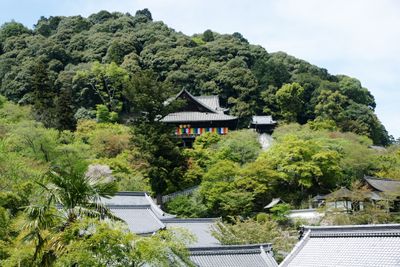
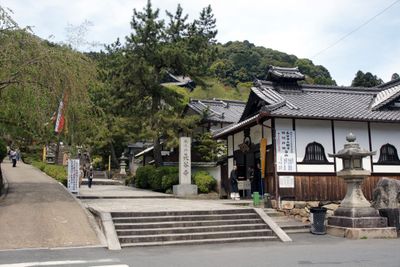
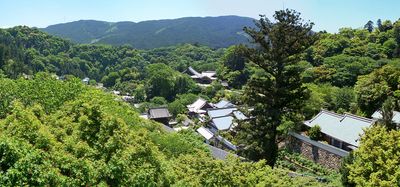
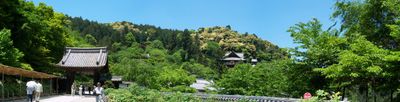
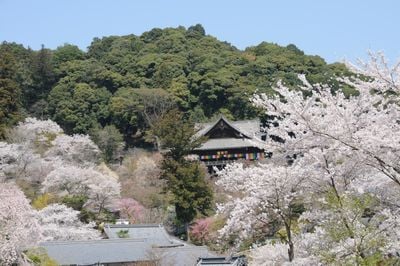
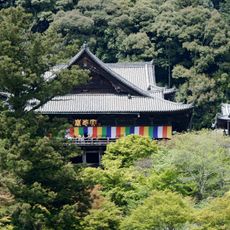
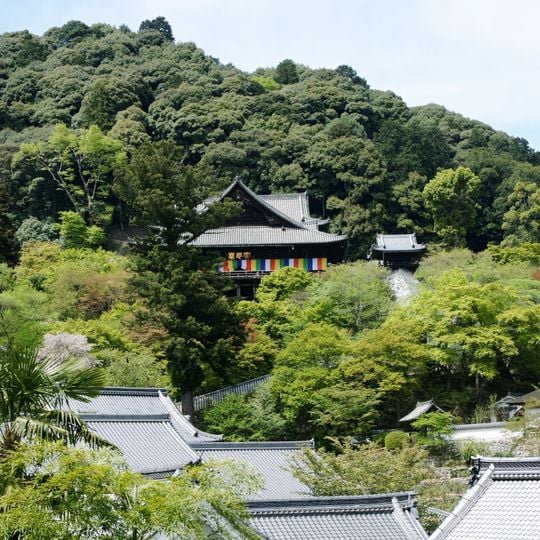
Hase-dera is a Buddhist temple in Sakurai, Nara Prefecture, known for its oversized wooden statue. The complex spreads across a wooded hillside and consists of several halls, corridors, and staircases connected through gardens.
Temple tradition holds that the monk Dōmyō founded Hase-dera in 686, enshrining a bronze plaque for Emperor Tenmu, and that in 727 the monk Tokudō placed an Eleven-Faced Kannon statue on the eastern hill by order of Emperor Shōmu. The temple was burned and rebuilt repeatedly; the present Main Hall was completed in 1650 with donations from Tokugawa Iemitsu. In 1588, monks expelled from Negoro-ji by Toyotomi Hideyoshi arrived and established the Buzan branch of Shingon Buddhism here.
The temple is the eighth stop on the Saigoku 33 Kannon Pilgrimage and is known as the "Temple of Flowers" for its peonies, with over 150 varieties and about 7,000 plants blooming from late April to early May. The "Futamoto no Sugi," a two-trunk cedar mentioned in The Tale of Genji, still stands in the grounds. The name Hase-dera comes from the place name Hatsuse, written with characters for "beginning" and "valley."
The climb to the main hall takes about 15 to 20 minutes and passes through a covered stairway. The paths can become slippery when it rains, so sturdy footwear is recommended.
The 399-step covered stairway was donated in 1039 by Nakatomi Nobukiyo, an official of Kasuga Shrine, in thanks for his child's recovery. The present corridors, however, date from later rebuilds, including those after an 1882 fire.
The community of curious travelers
AroundUs brings together thousands of curated places, local tips, and hidden gems, enriched daily by 92,781 contributors worldwide.