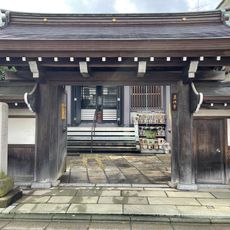
Ikegami Honmon-ji, Buddhist temple in Ikegami, Tokyo, Japan
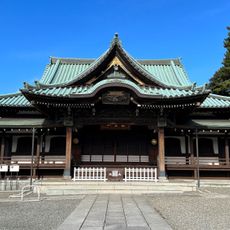
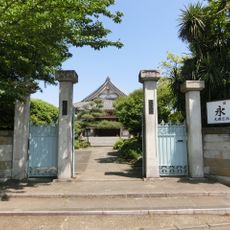
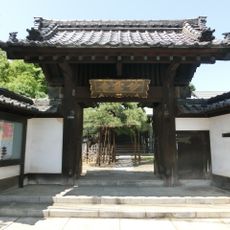
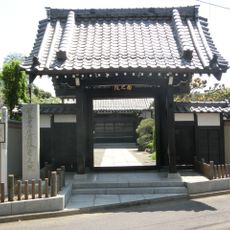
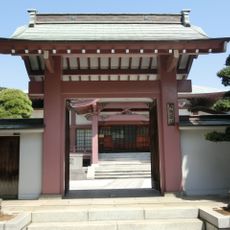
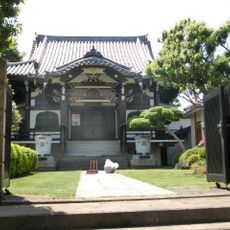
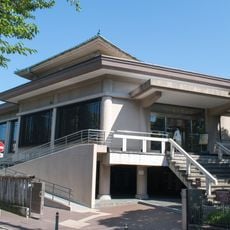
Ikegami Honmon-ji is a Nichiren Shū head temple in Ikegami, southern Tokyo. Its main hall, rebuilt in 1964 in reinforced concrete with a 27-metre-high irimoya roof, stands at the top of a wide stone stairway; the facade is dark reddish-brown timber framing with white plaster panels, and a row of gold ornaments runs along the roof ridge. A smaller open pavilion with a similar tiled roof stands to the right.
The site became a memorial in 1282 after the Buddhist teacher Nichiren took his last breath there. The current pagoda dates from 1608 and survived both the great 1923 earthquake and World War II bombing raids.
During the Oeshiki festival in October, participants carry lanterns decorated with artificial cherry blossoms through the grounds. This tradition recalls the legend that cherry trees bloomed when Nichiren died here, even though autumn had already begun.
The grounds open early in the morning and close at dusk, with no admission fee. Visitors should wear comfortable shoes, as the approach to the main complex involves a long stone staircase.
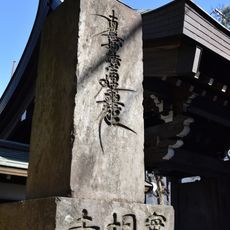
A memorial tablet for the USS Oneida, rammed and sunk by the British steamer Bombay outside Yokohama on 24 January 1870 with the loss of 125 people, was placed at the temple in May 1889 after a Buddhist ceremony for the lost sailors.
The community of curious travelers
AroundUs brings together thousands of curated places, local tips, and hidden gems, enriched daily by 92,784 contributors worldwide.