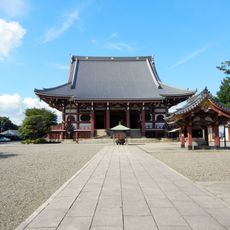
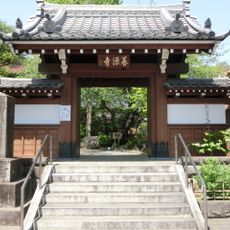
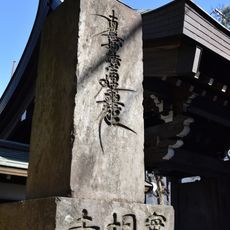
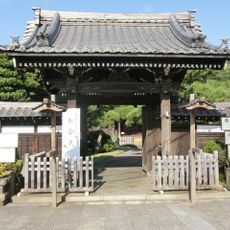
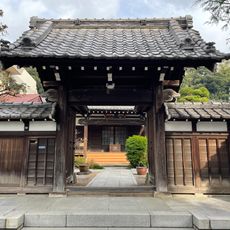
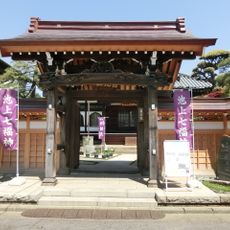
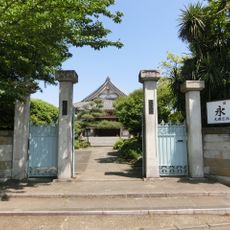
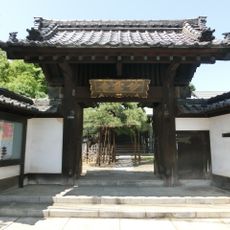
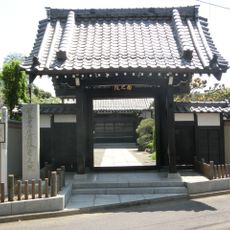
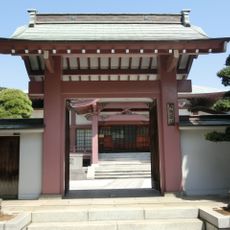
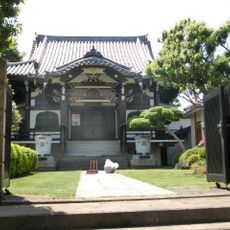
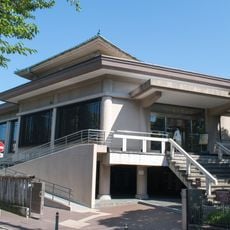
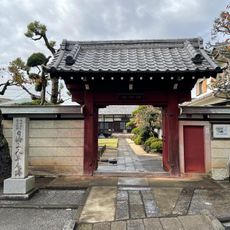
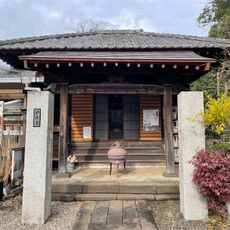
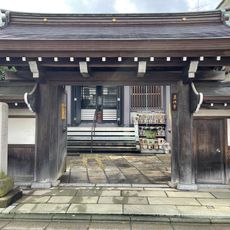
Hongyō-ji, Buddhist temple in Ikegami, Japan.
Hongyō-ji is a Nichiren-shū temple in Ikegami, Ōta, on the site of the residence of Ikegami Munenaka, where Nichiren died in 1282. Its precinct includes the hall built on the spot of the room where he passed away, the "go-rinju no ma". The temple is the head of the three Ikegami-in temples and is called Ōbō.
Hongyō-ji traces its origin to 1276, when a private Buddha hall in the Ikegami clan residence became a Hokke hall. In 1283, a year after Nichiren died in that residence, the monk Nichijō received the site and founded the temple. It became head of the three Ikegami sub-temples of Honmon-ji, called Ōbō, and was elevated from sub-head temple to head temple in 1986.
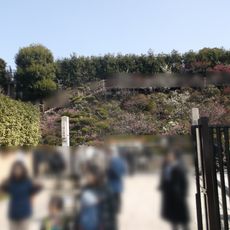
The temple keeps two traditions tied to Nichiren's death: an Oeshiki cherry tree, said to have blossomed out of season when he died and still standing in the garden, and hikizuri-dofu, a tofu dish Sōchū and his wife are said to have served Nichiren when he arrived at their residence.
Hongyō-ji stands about 13 minutes on foot from Ikegami Station on the Tōkyū Ikegami Line, or 12 minutes from the south exit of Nishi-Magome Station on the Toei Asakusa Line. From the main hall of Ikegami Honmon-ji it is only a 4-minute walk, so the two temples are easily visited together.
The temple keeps the grave of Kawakami Gensai, a Kumamoto domain samurai and loyalist activist, alongside that of the painter Kanō Tan'yū, head of the Kanō school. The cemetery also holds the grave of Uesugi Tsunanori's wife Eihime, daughter of Tokugawa Mitsusada of Kii.
The community of curious travelers
AroundUs brings together thousands of curated places, local tips, and hidden gems, enriched daily by 93,760 contributors worldwide.