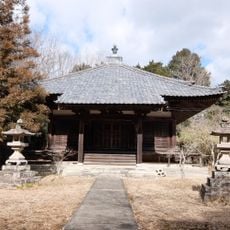
Chōkō-ji Temple, National Treasure Buddhist temple in Yashiro, Japan
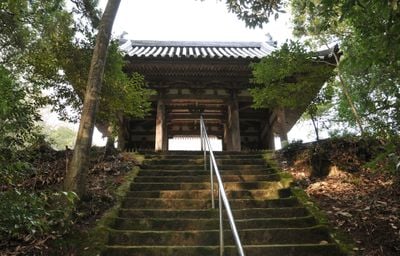
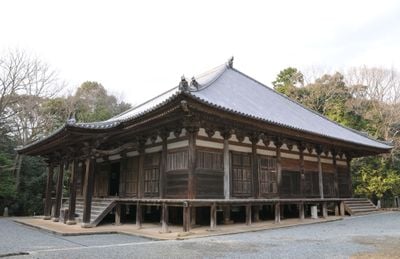
Chōkō-ji is a Buddhist temple whose Main Hall, a National Treasure, is a 7-bay-square building of dark timber with a hipped tile roof and a 3-bay entrance porch added in 1829. Inside, lattice doors and windows separate the outer and inner sanctuaries. A belfry with a skirted base stands on the grounds.
The temple was founded in the 7th century on Mount Gongen and later relocated to its current location. This move happened during a period when many religious institutions were shifting their presence.
Chōkō-ji belongs to the Kōyasan Shingon school, not a Zen lineage; its main image is a pair of eleven-headed Thousand-Armed Kannon statues, the west image moved here in 1413 from Kyoto's Sanjūsangen-dō. On 5 May the grounds host the Onioi dance, a Hyōgo Prefecture-designated intangible folk property. The temple's name is read Chōkō-ji, and the mountain name is Rokuyasan.
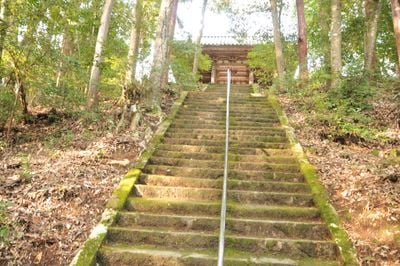
The temple stands in Katō, Hyōgo Prefecture, about 15 minutes by car from the Hyōgo-Tōjō interchange on the Chūgoku Expressway. From JR Shachō Station on the Kakogawa Line it is roughly 20 minutes by taxi, or 20 minutes by bus to the Kamikume-Chōkōji-guchi stop followed by about an hour on foot. Admission is free and the grounds may be visited at any time.
The hall's ridge bears two small ornaments, and the belfry in front of it is a separate Important Cultural Property, a hipped-roof structure with a hakama-shaped base. The temple's name is written 朝光寺, read Chōkō-ji, and its mountain name is Rokuyasan. The main image is a pair of eleven-faced Thousand-Armed Kannon statues, the west one moved here in 1413 from Kyoto's Sanjūsangendō.
The community of curious travelers
AroundUs brings together thousands of curated places, local tips, and hidden gems, enriched daily by 93,240 contributors worldwide.