Hiroshima Prefectural Art Museum, Art museum in Naka-ku, Hiroshima, Japan
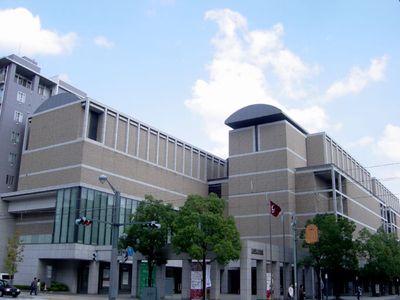
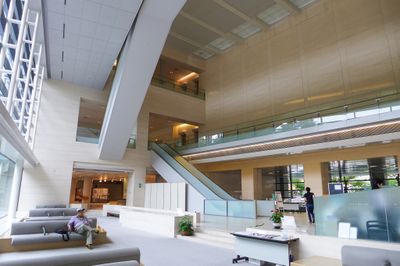
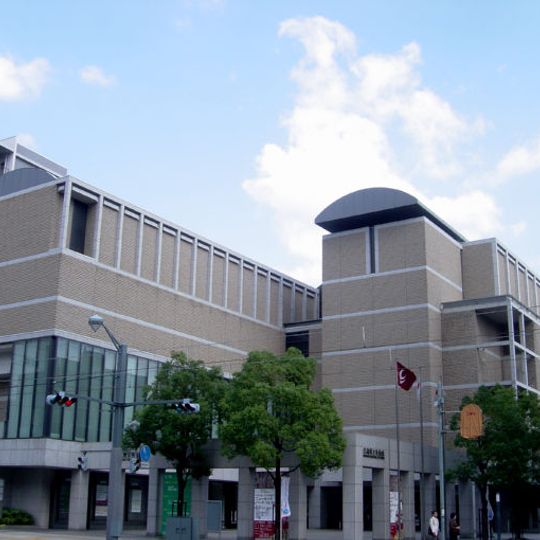
The Hiroshima Prefectural Art Museum occupies a four-storey building with one basement level and 19,926 m² of floor space, rebuilt in 1996 to a design by Nikken Sekkei and built by Taisei Corporation. Its tan brick facade is crossed by pale stone bands, and a tall band of narrow vertical windows sits above the glass curtain wall at street level. Inside, a multi-level atrium with a wide escalator and glass balustrades connects the galleries.
The site first held the Kankokan, a private museum of the Asano family's antiquities opened in 1913 and donated to the prefecture in 1939; it was destroyed by the atomic bomb in 1945. The prefectural museum opened on 22 September 1968 as the Chugoku region's first public art museum, and the current building by Nikken Sekkei replaced it on 6 October 1996.
The collection of over 5,000 works is built around three themes: artists connected to Hiroshima, Asian crafts, and international art of the 1920s and 1930s. Among the Hiroshima painters are Ai Mitsu, Kodama Kibo, Hirayama Ikuo and Okuda Genso. The museum's mascot is a Kakiemon-style Imari dish painted with a horse.
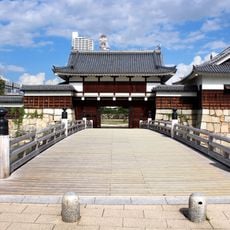
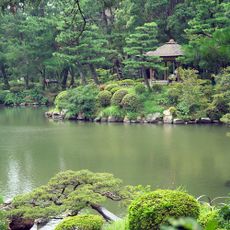
The museum stands next to Shukkei-en, and a combined ticket for both is sold at a discount. The Hiroden Shukkeien-mae stop on the Hakushima line and the meipuru~pu bus stop are immediately outside; JR Hiroshima Station is about 1 km away and Hiroshima Castle 400 m. Parking is in the basement and charged.
The museum's mascot is a porcelain dish: the Imari "E-kaki uma" (a horse in overglaze enamel), a Kakiemon-style piece from its collection. The museum also holds Salvador Dalí's "Dream of Venus", whose wall panels decorated the namesake pavilion at the 1939 New York World's Fair.
The community of curious travelers
AroundUs brings together thousands of curated places, local tips, and hidden gems, enriched daily by 93,766 contributors worldwide.