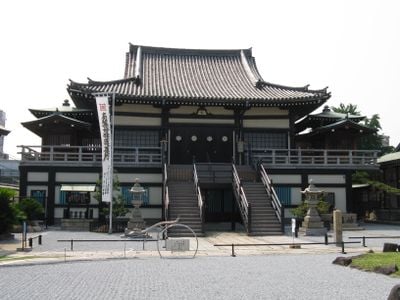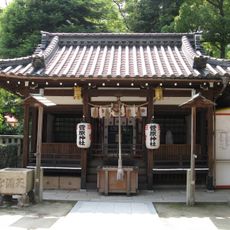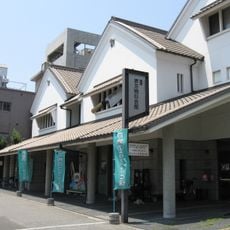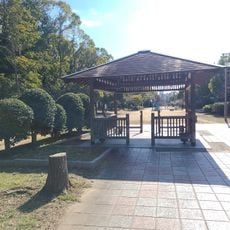
Myōkoku-ji Temple, Buddhist temple in Sakai, Japan.
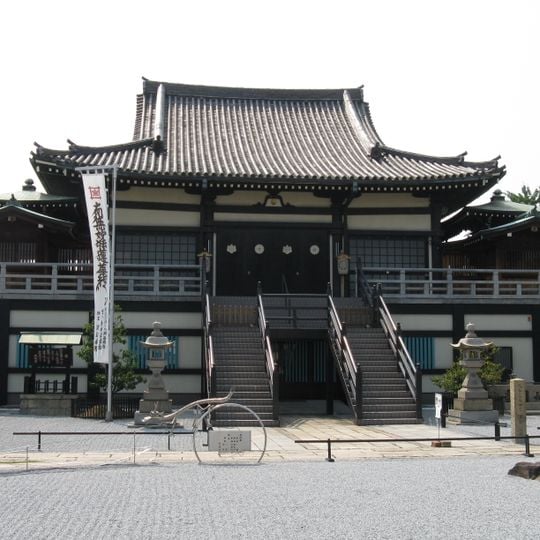
Myōkoku-ji is a Buddhist temple in Sakai featuring several traditional buildings arranged across landscaped grounds with a museum displaying temple treasures. The complex showcases architectural styles from different periods, with gardens and pathways connecting the main structures.
Myōkoku-ji was founded in 1562 when the warlord Miyoshi Jikkyū donated land and 500 koku of temple revenue to the monk Nikkō, who became its founding abbot. Toyotomi forces burned the whole complex in 1615, believing Tokugawa Ieyasu was staying there. Rebuilt from 1628, it was destroyed again in the July 1945 Sakai air raid, leaving only the sutra storehouse and the great cycad; the current main hall dates from 1973.
The temple's name comes from Myōkoku-in, the title of Nichikō's teacher Nisshu. The Great Cycad is honoured as the dwelling of Ugatoku-ryūjin, a deity with a man's face and a serpent's body; women hoping for an easy childbirth bury broken needles and iron scraps at its roots, a custom that continues today.
The temple is located just five minutes on foot from Myokokuji-mae Station on the Hankai Tramway Sakai Line, making it easy to reach. The grounds are open and accessible for visitors to walk through at their own pace.
The great cycad, a National Natural Monument since 1924, is said to be over 1,100 years old. Legend holds that Oda Nobunaga moved it to Azuchi Castle in 1579, but after it cried to return to Myōkoku-ji and bled when cut, he sent it back. Visitors still bury broken needles and iron scraps at its roots to pray for safe childbirth.
The community of curious travelers
AroundUs brings together thousands of curated places, local tips, and hidden gems, enriched daily by 93,154 contributors worldwide.