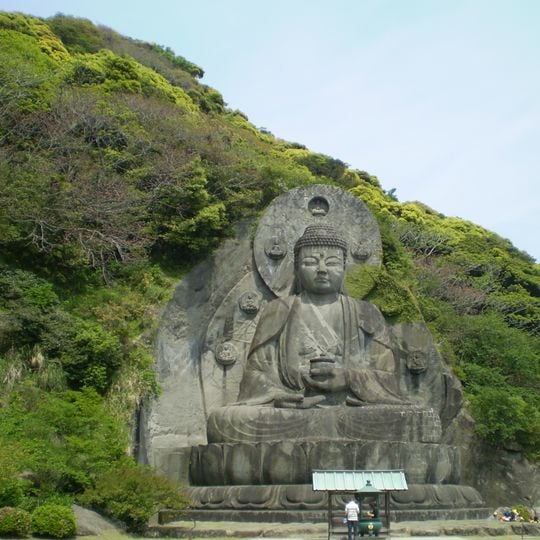
Nihon-ji Temple, Buddhist temple in Kyonan, Japan
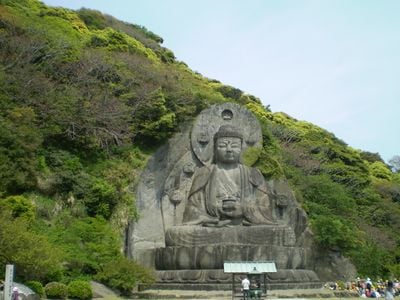
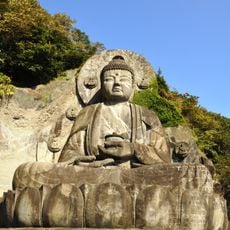
Nihon-ji is a Sōtō Zen temple on the southern slope of Mount Nokogiri. Its 31-metre Nihon-ji Daibutsu, carved in 1783, is a seated stone Yakushi Nyorai with hands together at the lap, a curled cap, and a circular halo of small figures. Below the crossed legs sits a tiered lotus base, with a small green-roofed shelter in front.
The temple was founded in 725 by the Buddhist monk Gyoki, who established it under imperial order to create a religious center. Over the centuries, the site expanded and developed into a pilgrimage destination that grew in importance within the region.
The 1,553 rakan statues were carved between 1779 and 1798 by stonemason Ōno Jingorō of Kazusa Province with 27 apprentices, on the vow of the ninth abbot Guden. Many were beheaded during the Meiji-era haibutsu kishaku. In 1989 the Indian government gave the temple a sapling from the Bodhi tree at Bodh Gaya, planted in the Daibutsu plaza.
Visiting all areas of the temple requires climbing many stairs, so wearing appropriate footwear is important for comfort and safety. Plan enough time to explore the different sections at a relaxed pace without rushing through.
The 31-metre Nihon-ji Daibutsu was completed in 1783 and depicts Yakushi Nyorai, the Buddha of healing. The temple's 1,553 rakan Arhat stones were carved from 1774 by stonemason Ōno Jingorō with 27 apprentices, and many were beheaded during the Meiji-era haibutsu kishaku. In 1989 India's government gave a sapling from the Bodhi tree of Bodh Gaya, planted in the Daibutsu plaza.
The community of curious travelers
AroundUs brings together thousands of curated places, local tips, and hidden gems, enriched daily by 93,254 contributors worldwide.