Heirin-ji Temple, Buddhist temple in Nobidome, Niiza, Japan
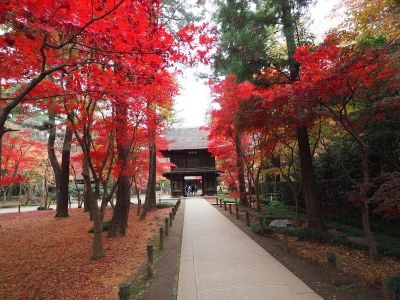
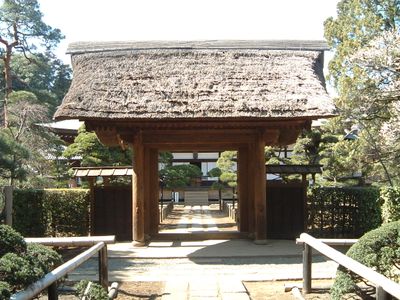
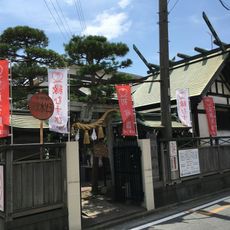
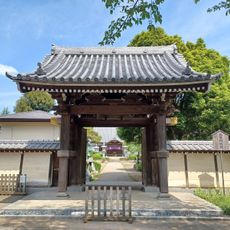
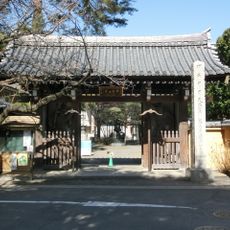
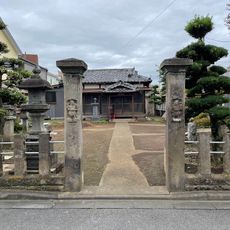
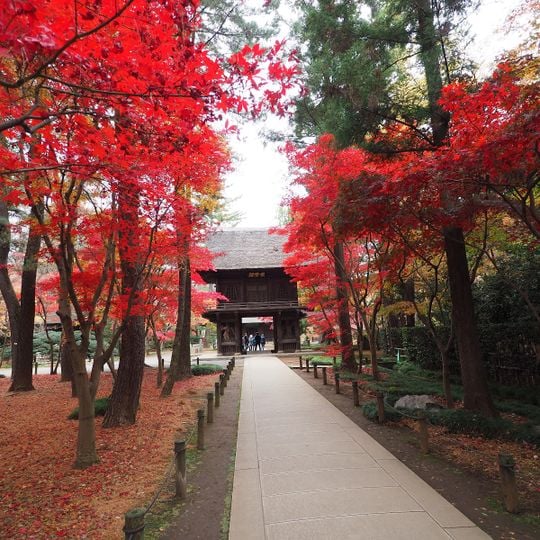
Heirin-ji is a Rinzai Zen temple of the Myōshin-ji school in Nobidome, Niiza, Saitama. Its roughly 40-hectare precinct on the Nobidome plateau holds a thatched main gate (sōmon) bearing a 1648 plaque by Ishikawa Jōzan, a thatched mountain gate built in 1664, a Buddha hall in Chinese style, and a forest designated a national natural monument in 1968.
Founded in 1375 in Iwatsuki, Saitama, by Sekishitsu Zenkyū, the temple was destroyed in 1590 during the attack on Iwatsuki Castle. Rebuilt in 1603 under Tokugawa Ieyasu, it was moved to Niiza in 1663 by Matsudaira Terutsuna, son of Kawagoe lord Matsudaira Nobutsuna, as the family temple.
The mountain name Kinpōzan combines characters from Fengtai Mountain Baoning Temple in Nanjing, where founder Sekishitsu Zenkyū trained. The main gate displays a 1648 plaque by Ishikawa Jōzan of Kyoto's Shisen-dō. Unlike many Tokyo-area temples, Heirin-ji holds no temple markets or public festivals.
The temple has no visitor parking, and the few private lots nearby hold only a handful of cars, so the bus to the Heirin-ji stop is the usual approach. A walking course follows the Nobidome canal, about 45 minutes on foot from JR Niiza Station. The grounds are a training temple, so monks may be working along the paths.
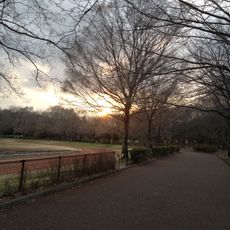
The temple forest was designated a national natural monument on 28 May 1968; about one hectare on the southeast side was added on 12 May 1976 to block a planned restaurant along the approach to the main gate. The woodland was once farm woodland, cut on a roughly 15-year cycle so that coppice shoots grew into the next trunks.
The community of curious travelers
AroundUs brings together thousands of curated places, local tips, and hidden gems, enriched daily by 94,369 contributors worldwide.