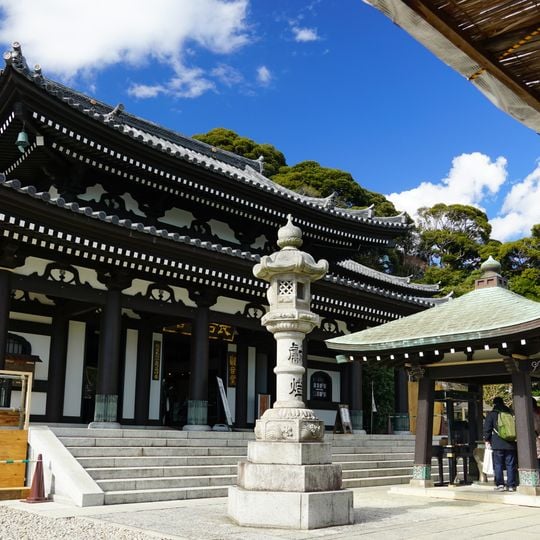
Hase-dera Temple, Buddhist temple in Kamakura, Japan.
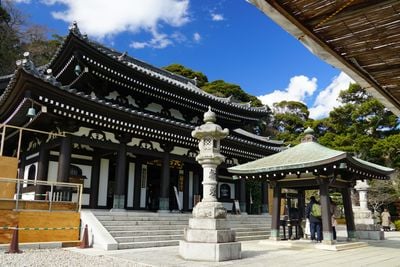
Hase-dera, formally Kaikō-zan Jishō-in Hase-dera, is a Jōdo-shū temple on the slope of Mount Kamakura in Hase, Kamakura. Its main halls stand on a hillside above the sea, and the Kannon Hall, which houses the 9.18-metre wooden Eleven-Headed Kannon, was rebuilt after the Great Kantō Earthquake. A broad flight of light grey stone steps climbs to the dark timber hall with its tiered roof and white ridges; a smaller green-roofed pavilion stands to the right.
The temple originated in the 8th century when monks found a wooden Kannon figure washed up on the shore. Over the centuries, successive generations expanded the site and added more buildings and shrines while maintaining the central hall.
The name derives from Kannon, the Buddhist goddess of mercy, worshiped across Japan and invoked by believers for protection and guidance. Visitors can observe the ritual of incense lighting before the statue as they move through the Kannon Hall, where pilgrims bow and voice their prayers.
The temple complex sits five minutes on foot from Hase Station and is reached through a series of steps that climb the hillside. Those who struggle with stairs should allow extra time, as there are no elevators between levels.
The Benten-kutsu is a low-ceilinged tunnel near the release pond in front of Benten-dō, entered through a winding passage. Its walls carry carvings of Benzaiten with her sixteen attendant boys, and the folk deity Uga-shin, shown with a human head and a snake's body, is also worshipped there. The cave is held to be where Kūkai, known as Kōbō Daishi, practised retreat.
The community of curious travelers
AroundUs brings together thousands of curated places, local tips, and hidden gems, enriched daily by 92,764 contributors worldwide.