Puyongdang, Lotus-pond pavilion in Haeju, North Korea
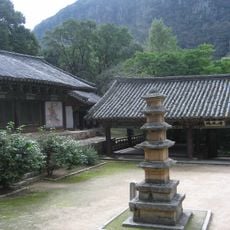
Puyongdang is a gable-roofed pavilion standing in a lotus pond in Puyong-dong, Haeju, supported by 33 granite pillars and reached by a bridge from the neighboring Uihyang Pavilion. It is 10.5 meters tall, with railings around its perimeter, and is the only water pavilion in North Korea. The pond, pavilion and Uihyang Pavilion are together called Puyongdang.
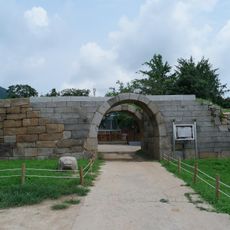
The pond was dug in 1354 as a fire-prevention reservoir during construction of Haeju Fortress, and lotus flowers later gave the site its name. A pavilion called Uihyang-gak was added in the 15th century, and Puyong Hall was built in 1500 in front of the Yong Gate, then extended over the pond in 1526. It was almost completely destroyed in the Korean War and rebuilt in 1953.
The name Puyongdang means "Lotus Hall", given because the pond filled with lotus flowers whose scent was known near and far. Today the name covers the pond, the Nonghyanggak pavilion and the hall together, and the site is counted among the Eight Views of Haeju. A nearby monument records a stay by King Seonjo.
Puyongdang stands in a lotus pond in Puyong-dong, Haeju, reachable only through official North Korean tourism channels with a guide. The pavilion is a viewing structure rather than an interior space, so visitors see it from the pond's edge. Nearby stands the stele commemorating King Seonjo's stay, which can be combined in the same visit.
The pond carries a local legend: frogs croaked day and night until a general surnamed Nam wrote words on a paper and threw it in; the croaking stopped and the villagers slept. The pavilion is National Treasure No. 68 and one of the Eight Views of Haeju.
The community of curious travelers
AroundUs brings together thousands of curated places, local tips, and hidden gems, enriched daily by 94,669 contributors worldwide.