Hyochang Park, Memorial park in Yongsan District, Seoul, South Korea
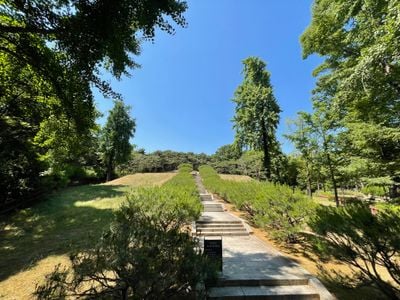
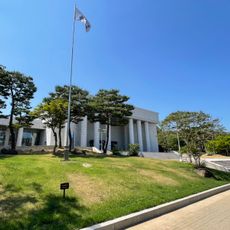
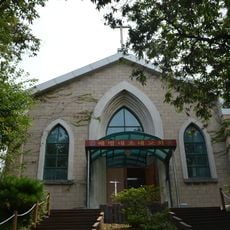
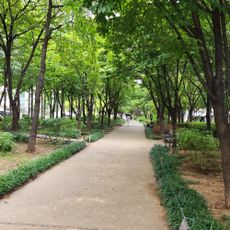
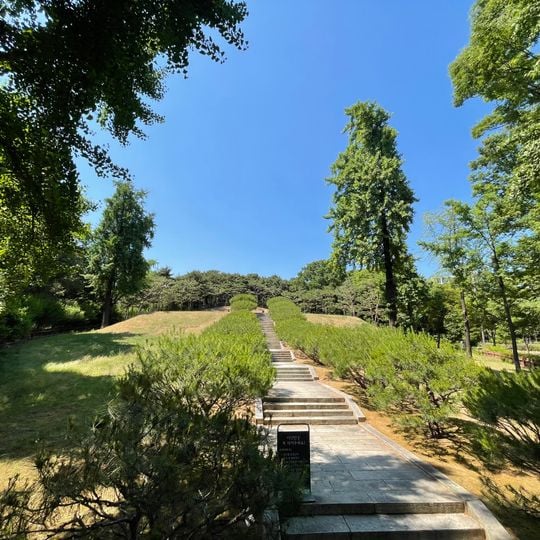
Hyochang Park is a memorial complex in Yongsan District spanning over 12 hectares with stone monuments, walking paths, and gardens integrated into a maintained landscape. The grounds are laid out clearly to help visitors find their way through the different areas.
The site began as Hyochangwon, the tomb of Crown Prince Munhyo, son of King Jeongjo, buried here in 1786; his mother, Consort Uibin Seong, was interred nearby five months later. The Japanese colonial government turned the grounds into Korea's first golf course in 1921 and redesignated them a park in 1940, moving the royal tombs out in 1944. From 1946 the remains of independence activists were reburied here, including Yi Bong-chang, Yun Bong-gil and Baek Jeong-gi, and Kim Koo was laid to rest in 1949.
The name "Hyochang" comes from the posthumous title of Crown Prince Munhyo, meaning "filial and prosperous". Near the graves, hibiscus, Korea's national flower, was planted in memory of the dead; the bushes beside Yun Bong-gil's grave were planted at 11:40 a.m., the hour of his 1932 bomb attack at Hongkou Park in Shanghai. A memorial rite is held every April 13, the founding date of the Provisional Government.
Visitors can reach the park through Exit 1 of Hyochang Park Station on Line 6 of the Seoul Metropolitan Subway. The entrance is straightforward to find once you emerge from the station.
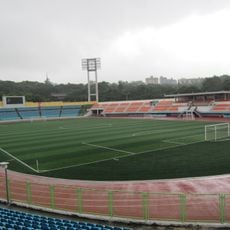
Hyochang Park is not a national cemetery: proposals in 2007 and 2013 to elevate it to that status both failed. It remains a neighbourhood park where tennis courts, a senior citizens' association building and a children's playground stand beside the graves, and residents opposed the change partly over restricted opening hours at national cemeteries.
The community of curious travelers
AroundUs brings together thousands of curated places, local tips, and hidden gems, enriched daily by 93,460 contributors worldwide.