Rundāle Palace, Baroque palace in Pilsrundāle, Latvia.
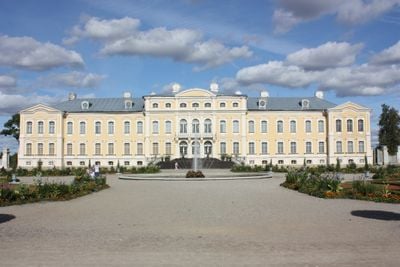
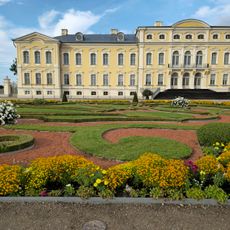
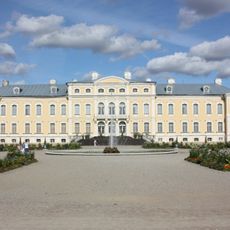
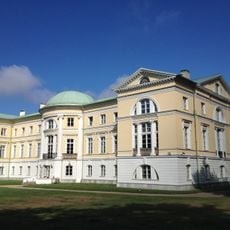
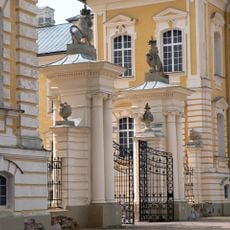
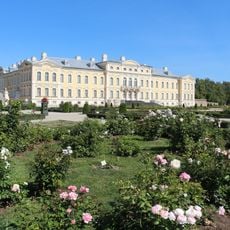
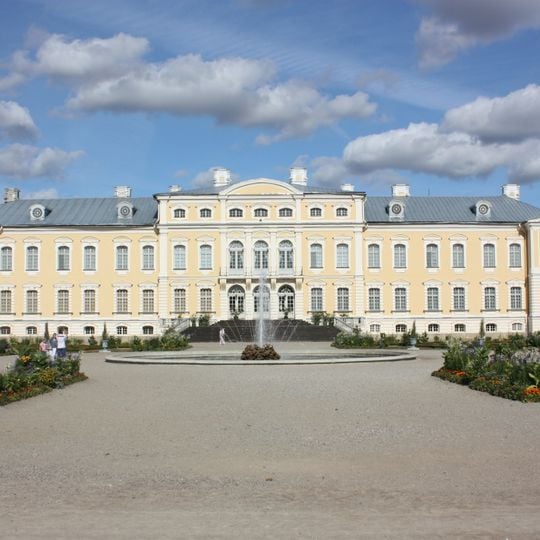
Rundāle Palace is a two-storey baroque palace of pale yellow walls with white pilasters and trim, built on an L-shaped plan around a paved courtyard. Its steep pale blue-grey metal roofs carry dormer windows and chimneys, and a rusticated base runs beneath rows of tall rectangular windows. A central block with a triangular pediment and arched entrance rises slightly above the wings, and a round stone fountain with a single jet stands on the gravel forecourt.
Biron bought the Ruhental estate in 1735 for 42,000 thalers, and Rastrelli laid the first stone on 24 May 1736. Work stopped after Biron's arrest in 1740 and resumed in 1764 under Johann Gottfried Seidel, with Rastrelli as chief intendant; the palace opened in 1768. In 1795 Catherine the Great gave it to Count Valerian Zubov, and the Shuvalov family held it until 1919, when retreating Bermontians partly burned it.
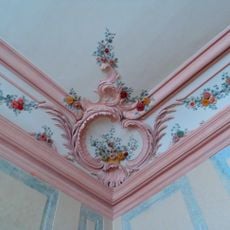
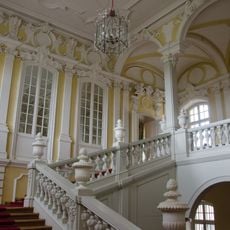
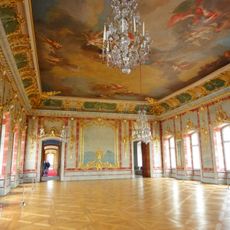
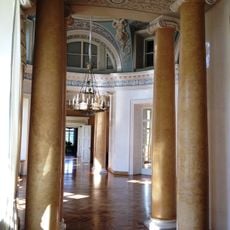
The palace's name comes from the German Ruhenthal, "Valley of Rest". Its halls carry the work of Berlin sculptor Johann Michael Graff, who with his brother Joseph decorated 27 rooms in 1767–1768; the date 1767 is engraved above a door in the Golden Hall. The White Hall, once the palace church, became a ballroom under Severin Jensen.
Guided tours in multiple languages lead visitors through the interior rooms and outdoor gardens at their own pace. Wear comfortable shoes as walking through the halls and across the grounds involves covering considerable ground.
The palace's brickwork uses unusually large bricks fired at a nearby works; some were shipped to St Petersburg and used in building Strelna Palace. In the Golden Hall, above a door, an engraving carries the date 1767, left by Johann Michael Graff's stucco team.
The community of curious travelers
AroundUs brings together thousands of curated places, local tips, and hidden gems, enriched daily by 94,641 contributors worldwide.