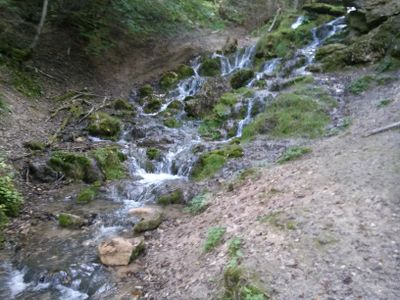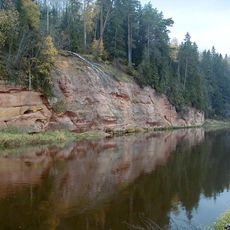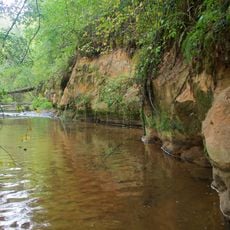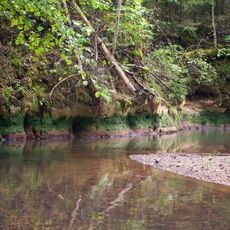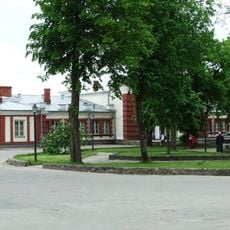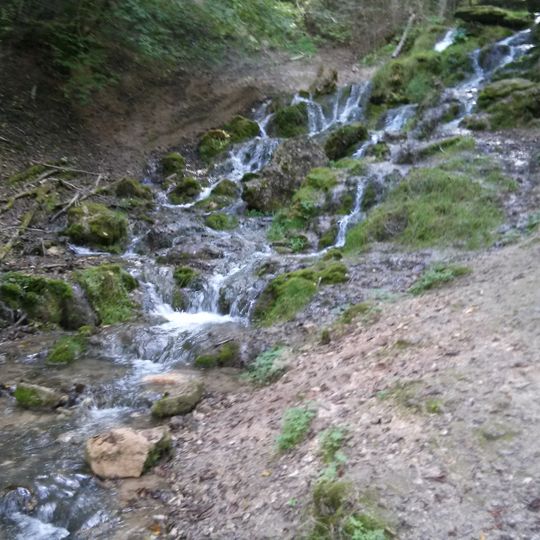
Kazu grava, Protected geological monument in Priekuļi Parish, Latvia.
Kazu grava is a protected geological monument in Priekuļi Parish featuring clay pits and sedimentary rock layers from the Upper Devonian period. The exposed strata reveal how an ancient marine environment once covered this region millions of years ago.
The site was studied in 1970 by geologist V. Kuršs, who discovered fossil remains of armored fish from the Upper Devonian period. These fossils rank among the most complete specimens found in the Baltic region.
Scientists and researchers regularly visit the site to study the geological formations and conduct field research on ancient marine ecosystems.
The protected site is located in a rural area and is most accessible during dry seasons when the clay pits are not waterlogged. Visitors should wear appropriate footwear and clothing suited for uneven ground.
The clay pits contain fossils of Asterolepis ornata and Panderichthys rhombolepis, two fish species whose armored bodies are preserved with remarkable detail. Such well-preserved specimens in this form are extremely rare in the Baltic region.
The community of curious travelers
AroundUs brings together thousands of curated places, local tips, and hidden gems, enriched daily by 90,856 contributors worldwide.