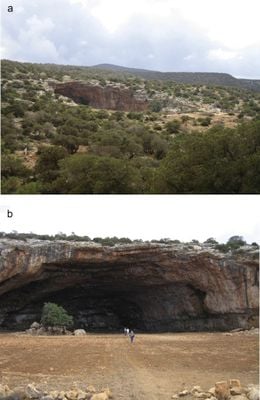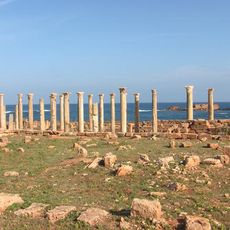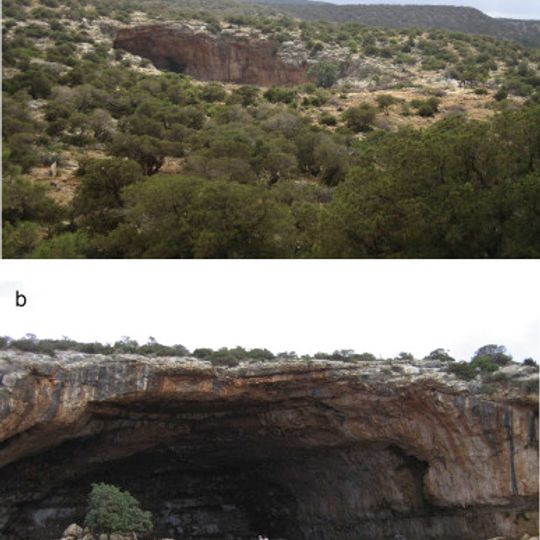
Haua Fteah, Cave and archaeological site in Cyrenaica region, Libya.
Haua Fteah is a large cave with an entrance about 20 meters wide and 50 meters high, extending deep into limestone formations near the Mediterranean coast. The interior contains layered deposits from different periods stacked on top of each other, creating a record of human occupation over many millennia.
The cave began to show signs of human habitation around 200,000 years ago through stone tools and animal remains found in its deepest layers. Over thousands of years, people returned repeatedly to this location, adapting their techniques and ways of life until eventually the cave was no longer regularly used.
Excavated objects like decorated ostrich eggs and pierced seashells found here show how early inhabitants expressed creativity and developed craftsmanship. These items reveal what mattered to the people who made and used them over countless generations.
The site sits just under one kilometer from the Mediterranean coast at the base of Jebel Akhdar mountain and can be reached by local roads. Visitors should check conditions beforehand since access sometimes requires permits and local circumstances can vary throughout the year.
Scientists discovered a human jaw bone here dated between 73,000 and 65,000 years old, providing rare biological evidence about early populations in North Africa. This find is among the few direct remains that show what early inhabitants of this region actually looked like.
The community of curious travelers
AroundUs brings together thousands of curated places, local tips, and hidden gems, enriched daily by 60,000 contributors worldwide.