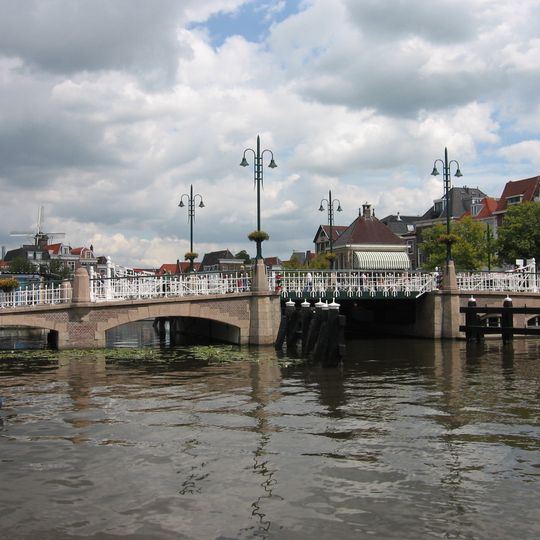
Blauwpoortsbrug, Rolling lift bridge in central Leiden, Netherlands.
Blauwpoortsbrug is an iron rolling lift bridge spanning the Galgewater, connecting Turfmarkt and Beestenmarkt in central Leiden. Both sides feature five semi-circular arches with granite decorative elements, and a wooden deck is supported by sturdy iron girders.
This bridge was built between 1910 and 1911 under the design of architect Johan Rückert to replace an older structure. The previous swing bridge from 1866 could no longer handle the traffic demands of horse-drawn trams that were becoming common at the time.
The bridge takes its name from the former Blue Gate, an old city entrance that once stood at the start of Haarlemmerstraat. This historical name connection reflects a forgotten chapter of Leiden's urban layout that visitors walking here would not otherwise notice.
The bridge welcomes pedestrians and cyclists with a solid wooden surface that is easy to navigate. A fish shop now occupies the former bridgekeeper's house nearby, offering a local food option if you need a break while exploring the area.
The bridge operates using an electric rolling bascule mechanism that is hidden within an adjacent structure rather than exposed. This design approach is different from typical lift bridges that display their counterweight systems openly to passersby.
The community of curious travelers
AroundUs brings together thousands of curated places, local tips, and hidden gems, enriched daily by 90,823 contributors worldwide.