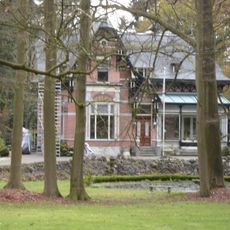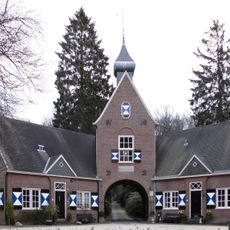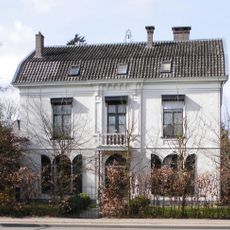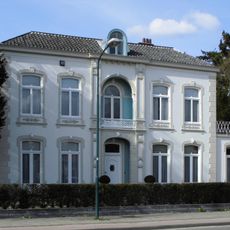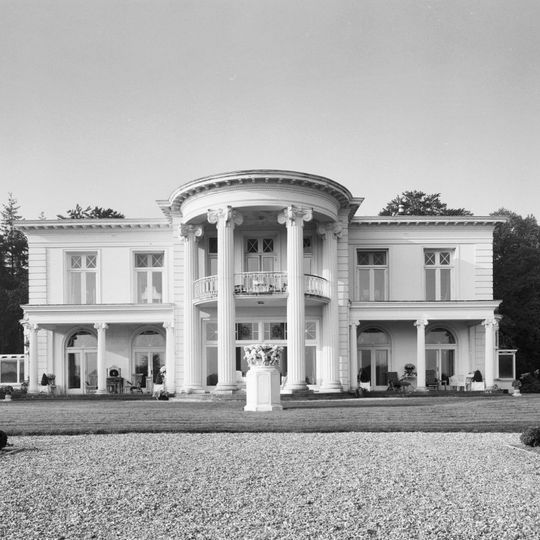
Huis te Maarn, Neoclassical architectural ensemble in Maarn, Netherlands.
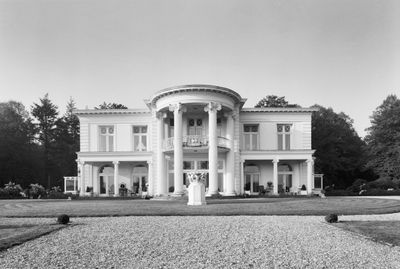
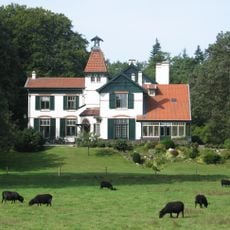
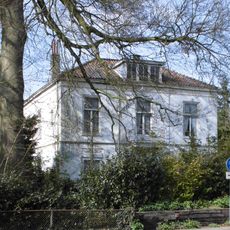
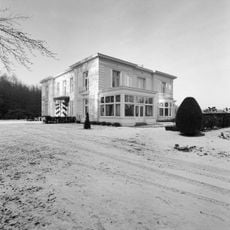
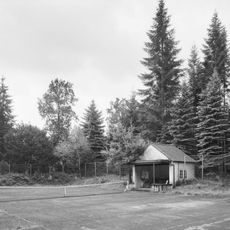
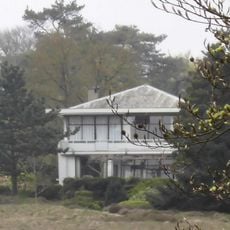
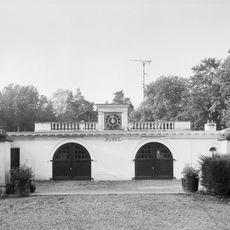
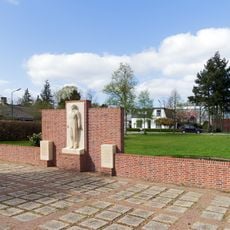
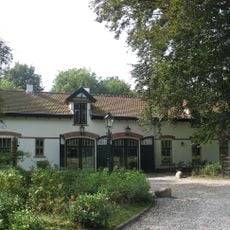
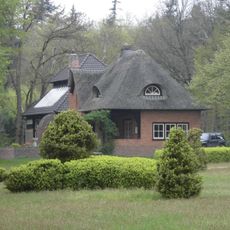
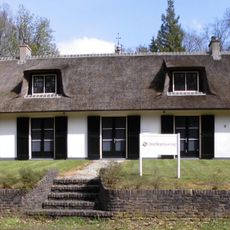
Huis te Maarn is a neoclassical mansion with a white-plastered exterior and a curved portico supported by four Ionic columns, positioned on raised ground along the Utrechtse Heuvelrug slope. The estate includes several supporting buildings, such as a service structure, garage, stable for horses, and an orangery constructed at a later date.
Built between 1915 and 1916 by architect Jan Stuyt for banker Willem Benjamin Blijdenstein, the estate replaced an earlier tea house that stood on the heath. The construction marked a transformation of the landscape in this part of the Netherlands.
The house reflects American architectural influences in its design, particularly through the semicircular colonnade that recalls buildings across the Atlantic. Visitors can see this international approach expressed in the mansion's proportions and formal entrance arrangement.
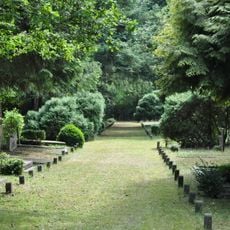
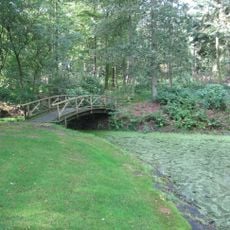
The grounds sit on a slope and offer several viewpoints that extend from the main house through terraced gardens toward a central basin. Access to the entire site is best approached from the elevated areas, as the terrain features a steep incline.
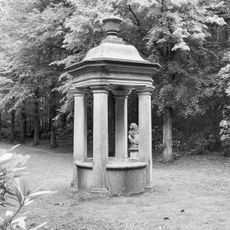
The garden features carefully composed sightlines that radiate from the upper terraces down to a well constructed from Bentheimer sandstone at the lowest point of the property. These visual connections unite the house architecture with the natural slopes of the land.
The community of curious travelers
AroundUs brings together thousands of curated places, local tips, and hidden gems, enriched daily by 91,618 contributors worldwide.