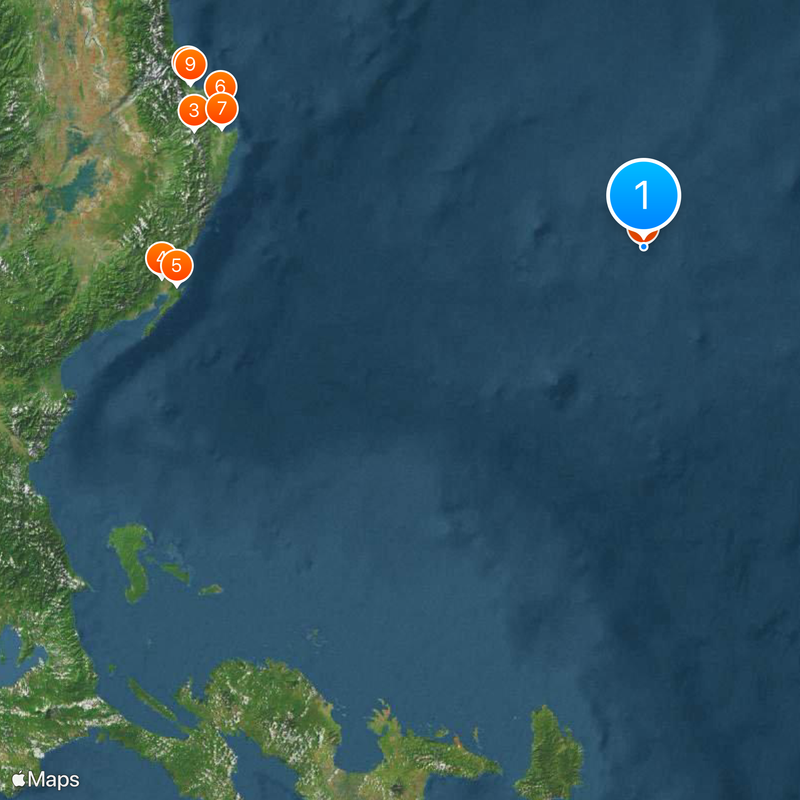
Apolaki Caldera, Underwater caldera in Philippine Sea, Philippines.
Apolaki Caldera is a circular depression on the seafloor in the Philippine Sea, stretching roughly 150 kilometers across. The structure lies several thousand meters below sea level and forms one of the largest underwater formations of its kind in the western Pacific.
A research team led by geophysicist Jenny Anne Barretto identified this formation during a seafloor mapping survey in 2019. Analysis shows volcanic activity occurred roughly 48 to 26 million years ago.
The name comes from Philippine mythology and refers to a deity associated with the sun and sky in pre-colonial traditions. Scientists from the region chose this name to connect the discovery with local heritage.
Access to the formation is only possible through research vessels equipped with specialized sonar, as it sits at great depth. Scientific missions require advanced technology to map the seafloor and collect samples.
Research suggests the presence of magmatic rocks extending up to 15 kilometers deep, pointing to past eruptions. This depth exceeds many known volcanic structures and shows an intense geological past.
The community of curious travelers
AroundUs brings together thousands of curated places, local tips, and hidden gems, enriched daily by 91,557 contributors worldwide.