Giewont, Mountain peak in Tatra County, Poland
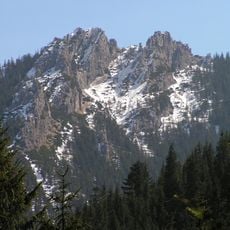
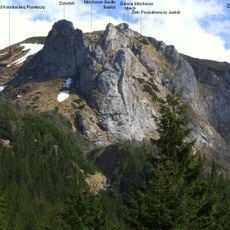
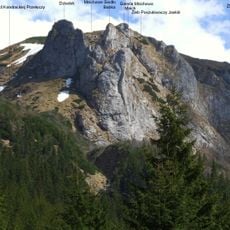
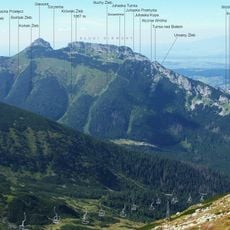
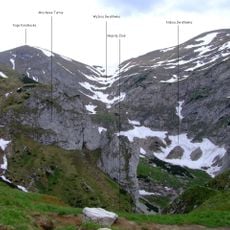
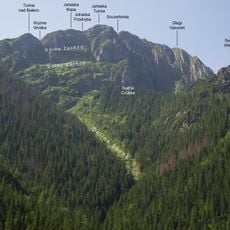
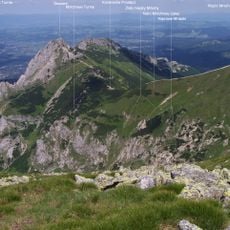
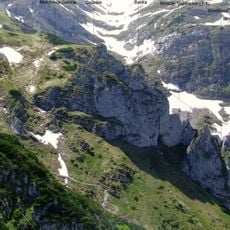
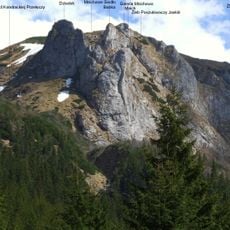
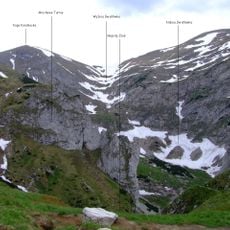
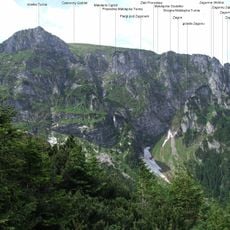
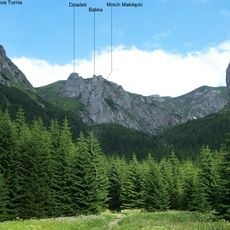
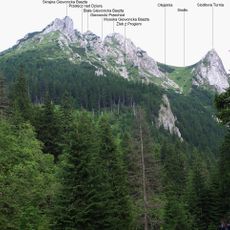
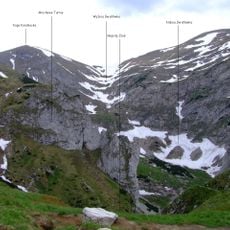
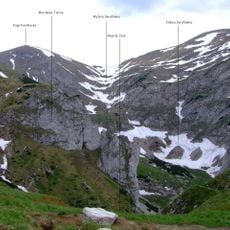
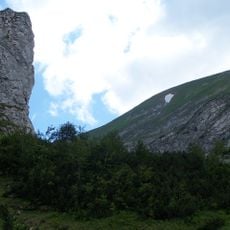
Giewont is a mountain in the Western Tatra range near Zakopane, rising to 1895 meters above sea level. Its northern face drops sharply in vertical cliffs, while three separate rocky summits form the peak zone and give the mountain its characteristic triangular shape.
The earliest document mentioning the mountain dates from the 16th century and records a copper mine called Gyewant within it. The first recorded ascent was made in 1830 by Franciszek Herbich and Aleksander Zawadzki, and Mariusz Zaruski completed the first winter ascent in 1904. In 1901 a 15-metre steel cross was erected on Great Giewont, inscribed on the Lesser Poland monument register in 2007.
The name may derive from the German Wand (wall, rock), from Gewand or Gähwand, or, per Mariusz Zaruski, from the Goral surname Giewont, still borne by local families. From the north the ridge reads as a reclining knight: Długi Giewont is the torso, Wielki Giewont the face. An 1880 poem by Adam Asnyk spread this image, and in 1875 the mountain appeared on Zakopane's town seal.
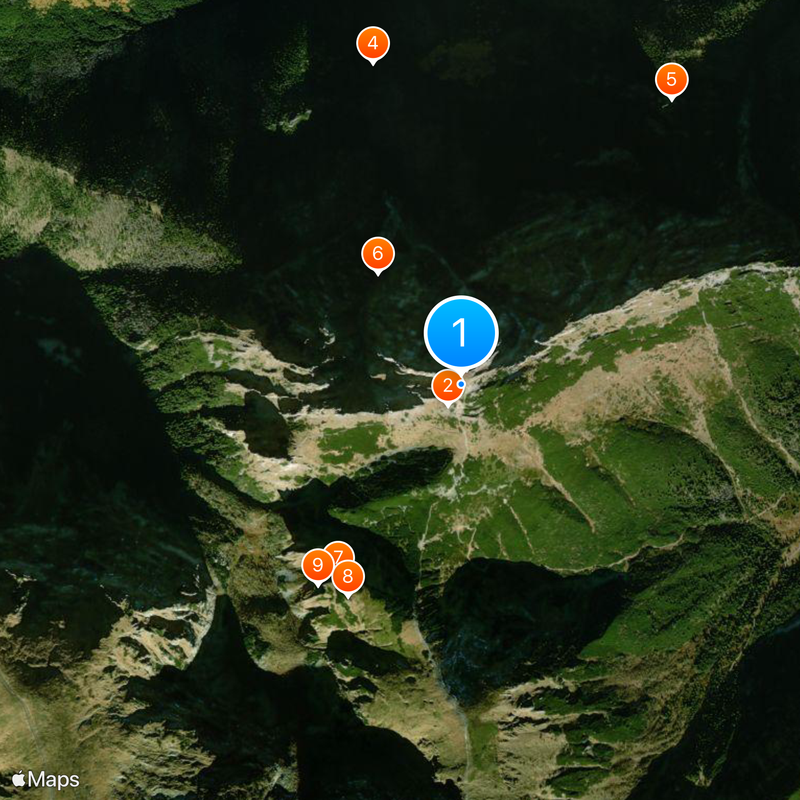
Several marked paths begin at Kuznice and pass through Hala Kondratowa, taking about four to five hours to reach the top. The trail can become crowded during peak summer months, so setting off early in the morning helps avoid the busiest hours.
The 15-metre steel cross on Great Giewont was inscribed on the register of historical monuments of the Lesser Poland Voivodeship in 2007. In 1982, during martial law, a banner with the Solidarity logo was hung on it. On 22 August 2019, lightning struck the cross and a metal chain near the summit, killing four people.
The community of curious travelers
AroundUs brings together thousands of curated places, local tips, and hidden gems, enriched daily by 92,602 contributors worldwide.