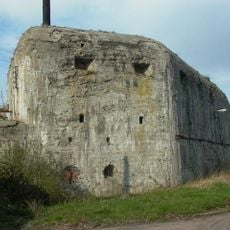
Granary on the Narew river, Neo-Renaissance granary in Nowy Dwór Mazowiecki, Poland
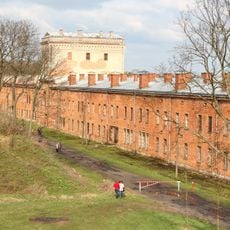
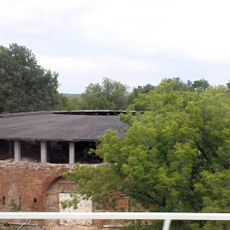
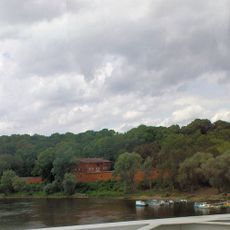
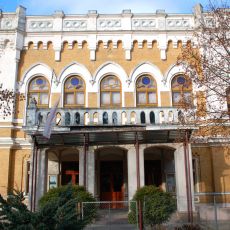
The Granary on the Narew River is a historic storage building with two main floors and three open portals facing the waterside. Thick stone walls and sturdy architectural details throughout define its solid construction.
The granary was built between 1838 and 1844 in the neo-Renaissance style to a design by architect Jan Jakub Gay, funded by the Polish Bank. Its first floor had openings for artillery and gun fire, so it could also serve a defensive role. It stored grain until 1853, when the military authorities bought it from the bank for use as a depot for Modlin Fortress.
In 1999 the ruin appeared as Castle Horeszków in Andrzej Wajda's film adaptation of Adam Mickiewicz's poem Pan Tadeusz. The building stands on the so-called Kępa Szwedzka at the mouth of the Narew, and its later fate, including a 2010 sale to a developer and a 2023 court auction, is followed closely by local residents.
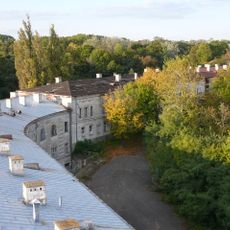
The ruin stands on the Kępa Szwedzka near the mouth of the Narew, reachable on foot from Nowy Dwór Mazowiecki. The interior was gutted by fire in 1939 and the west wing was demolished after the war, so the building is unsafe to enter; steel tie rods and anchors now hold the surviving walls. It was put up for bailiff auction in 2023.
The first floor was fitted with openings for artillery and small-arms fire, so the granary could double as a defensive post. The building also served as the set for Castle Horeszków in Andrzej Wajda's 1999 film adaptation of Adam Mickiewicz's "Pan Tadeusz".
The community of curious travelers
AroundUs brings together thousands of curated places, local tips, and hidden gems, enriched daily by 94,498 contributors worldwide.