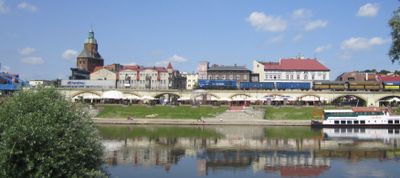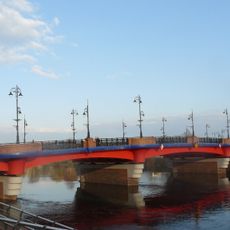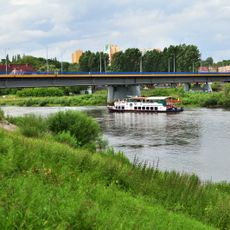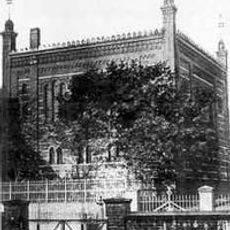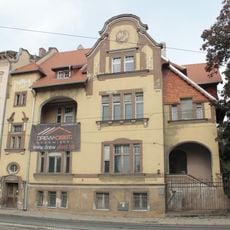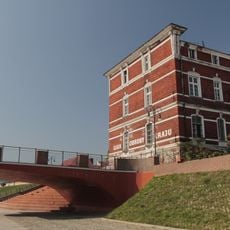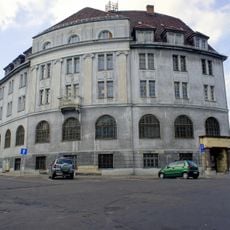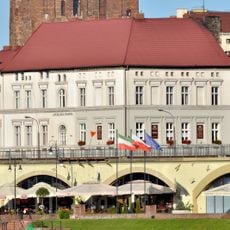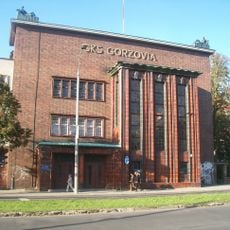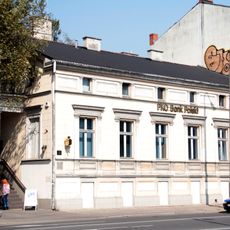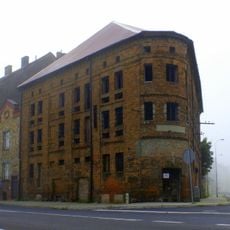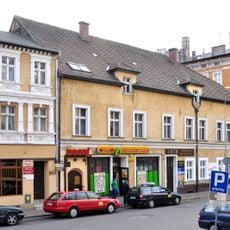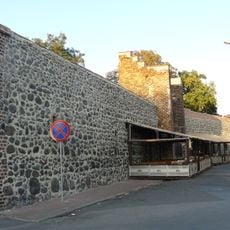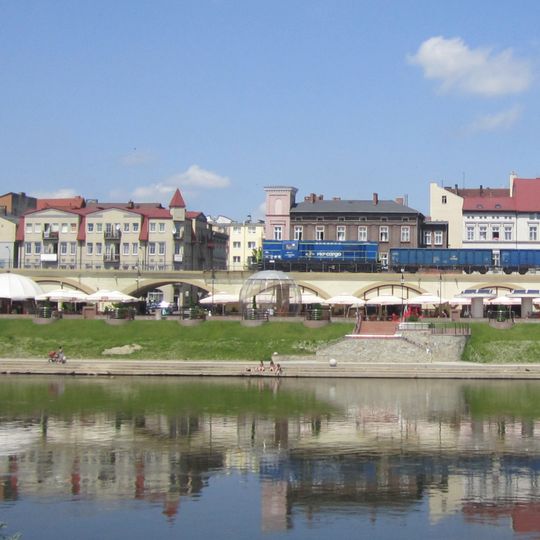
Railway viaduct in Gorzów Wielkopolski, Railway viaduct in Gorzów Wielkopolski, Poland.
The railway viaduct in Gorzów Wielkopolski is a 2116-metre masonry structure of about 70 parabolic brick vaults, interspersed with five steel overpasses at Herberta, Chrobrego, Wodna, Młyńska and Garbary streets. The bricks, fired in orange and red, were machine-made, probably in nearby brickyards. The viaduct runs along the Warta River on railway line 203 from kilometre 295.591 to 297.707.
The single-track Prussian Eastern Railway reached Landsberg in 1856–1859. Between 1905 and 1914 a double-track line was built through the town on a viaduct; work ran from 1910 at several points at once and ended in late 1914. Whole streets, including Nadbrzeżna with its printing works, were demolished; only the Herzog villa survived.
The viaduct has been listed in the Polish register of monuments since 2 June 2009, with 1,700 metres of its length protected. It is the longest technological monument in Poland. The brick arches, fired in orange and red, were made by machine, probably in nearby brickworks, some of which produced material specially for the viaduct.
The viaduct can be viewed from several public areas around Gorzów Wielkopolski, particularly from the banks of the Warta River. The best perspective comes from different sides of the city to see the full length and structure.
The viaduct was the prototype for the elevated railway viaducts later built in Berlin and Wrocław. Its bricks were machine-made, not hand-formed, fired in orange and red tones, most likely in nearby brickworks, some of which produced material specifically for this structure.
The community of curious travelers
AroundUs brings together thousands of curated places, local tips, and hidden gems, enriched daily by 93,121 contributors worldwide.