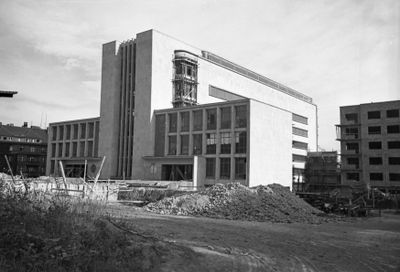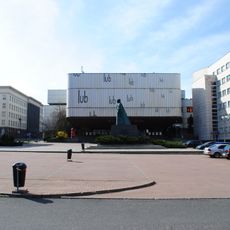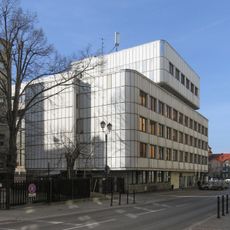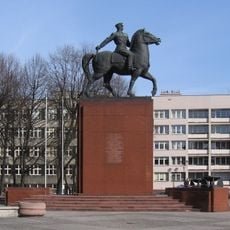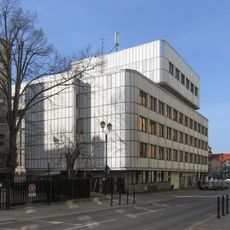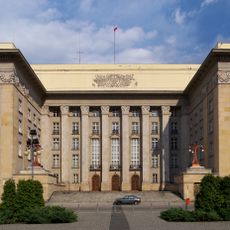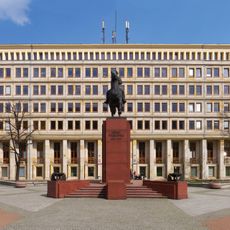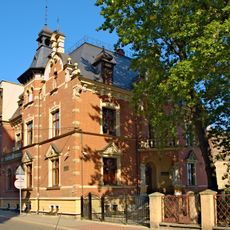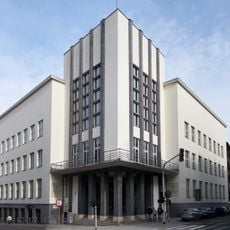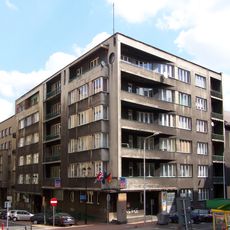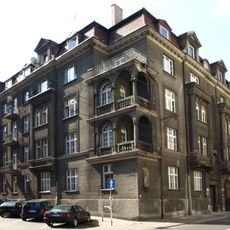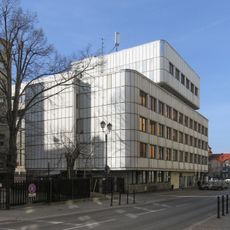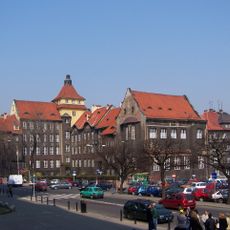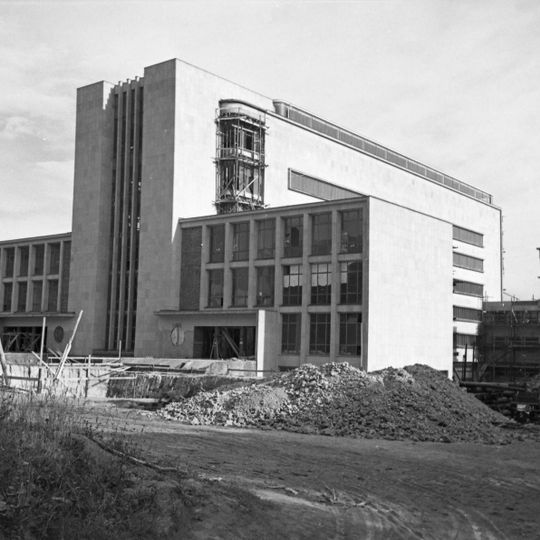
Gmach Muzeum Śląskiego w Katowicach, Modern architectural museum building in Katowice, Poland.
The Gmach Muzeum Schlesiens is a seven-story modern building with large glass surfaces that allowed natural light to reach the exhibition halls. The structure featured advanced climate control systems designed to preserve the artworks and regional collections displayed inside.
The Silesian Museum, founded in 1929, first showed its collections in rooms of the Silesian Sejm building. Karol Schayer prepared the design in 1935, construction began in 1936, and finishing work was still under way in August 1939. In March 1940 the German occupiers ordered the building demolished; Auschwitz-Birkenau prisoners carried out the demolition in 1941–1944, leaving only a small residential wing.
The museum served as a gathering place where visitors encountered regional artworks and objects connected to daily life and industry in Silesia. The exhibitions presented traditional crafts and practices that locals recognized from their own communities.
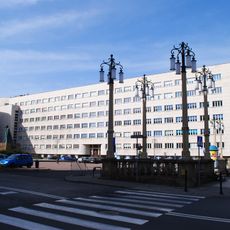
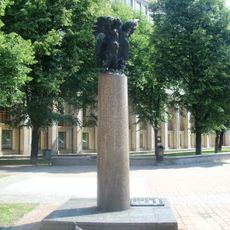
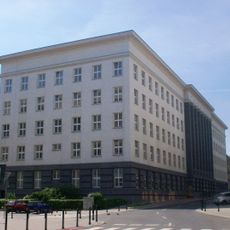
The building no longer exists: it was demolished between 1941 and 1944, and a socialist realist office block from the 1950s stands on the site. Its plans are kept in the archive of the Katowice city office, so the building can be studied on paper rather than visited. The main tower ran north-south, perpendicular to Jagiellońska Street, with a public road passing beneath the main block.
The building's air-conditioning system maintained pressure higher than atmospheric to keep dust out of the collection. Lifts opened automatically via photocells, and escalators carried visitors between floors. These systems placed it among Europe's most modern public buildings.
The community of curious travelers
AroundUs brings together thousands of curated places, local tips, and hidden gems, enriched daily by 94,293 contributors worldwide.