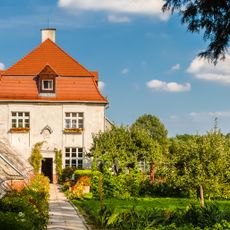
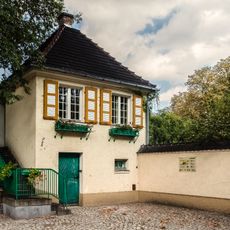
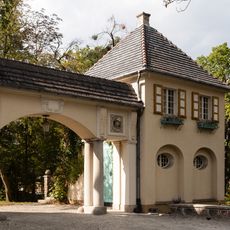
Piotrkowice Palace, Renaissance palace in Piotrkowice, Poland.
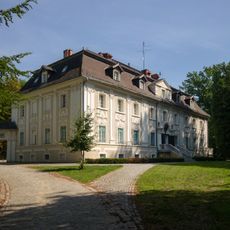
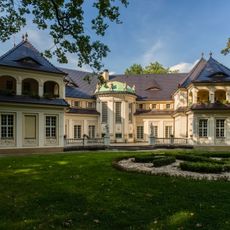
Piotrkowice Palace is a four-storey rectangular building with a high mansard hipped roof, eight axes wide on the entrance side and six on the garden side. The ground floor is banded, while the upper facades are covered with stucco decoration: colossal pilasters with Tuscan-composite capitals crowned by a count's crown, and window surrounds with acanthus cartouches. The interior preserves Mannerist rollwork vaults and a hall with Baroque stucco bearing the von Maltzan coat of arms.
The village was first documented in 1392, when it belonged to the von Prittwitz family, who took their name from it. A Renaissance palace existed by the mid-16th century, held by the von Nostitz from 1574. After Anna Maria von Studnitz married Joachim Wilhelm von Maltzan in 1687, the building was raised and remodelled in early Baroque style around 1693, with stucco by Giovanni Simonetti or his brother. The von Danckelmann family owned it from 1787 until 1945.
The village gave its name to the von Prittwitz family, recorded here in 1392, and the German name Groß Peterwitz remained in use until 1945. The palace later served as a cultural centre for a state agricultural cooperative after the war. In the park stand oaks over 500 years old, listed as natural monuments.
The palace is located northwest of Wrocław and is best visited by car, as public transport to the area is limited. Parking is available on site, and it is advisable to contact ahead to arrange access.
The palace is now a ruin, and its landscape park has run wild; the von Danckelmann family mausoleum of 1850 is itself a ruin. The estate passed to the von Danckelmanns in 1787 and stayed in the family until 1945, when Silesia became Polish and the property became a state farm.
The community of curious travelers
AroundUs brings together thousands of curated places, local tips, and hidden gems, enriched daily by 94,420 contributors worldwide.