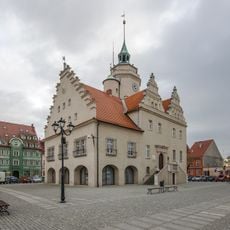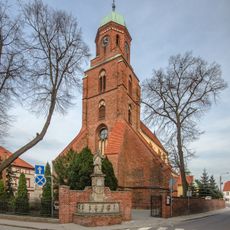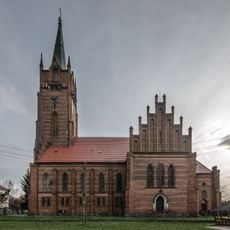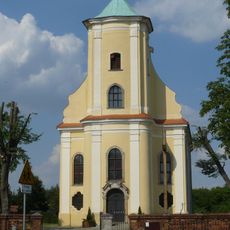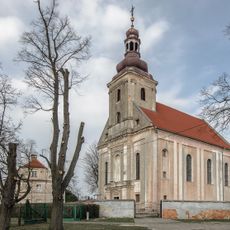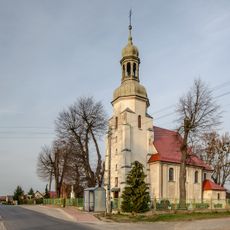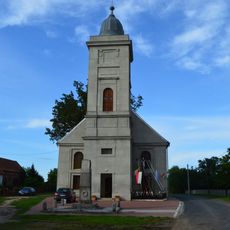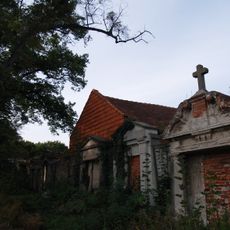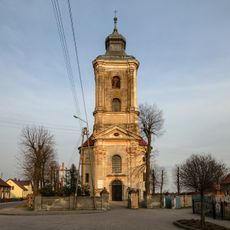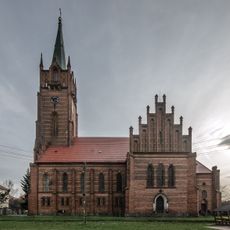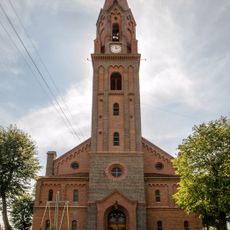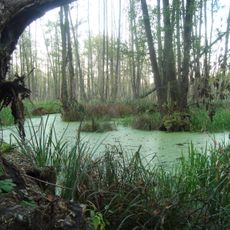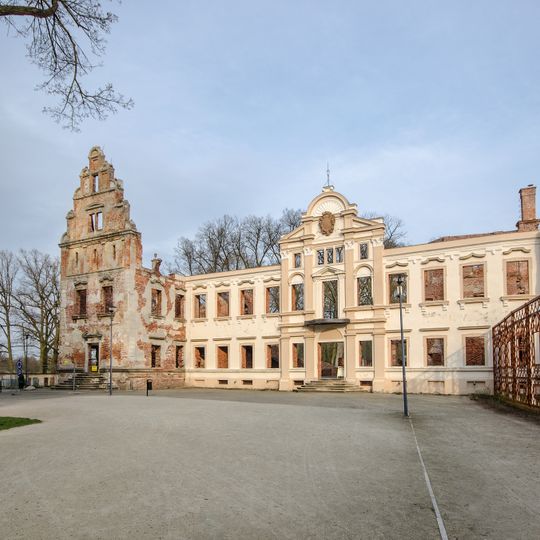
Pałac w Żmigrodzie, Neoclassical palace in Żmigród, Poland
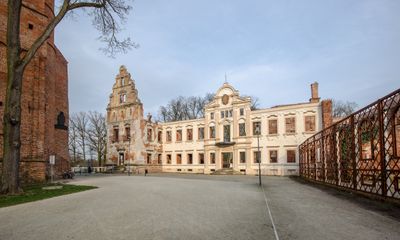
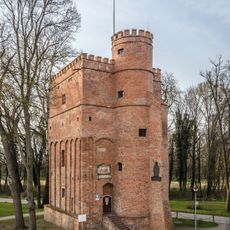
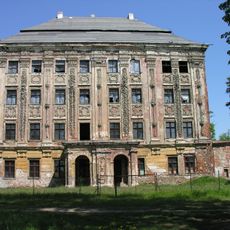
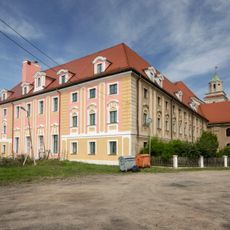
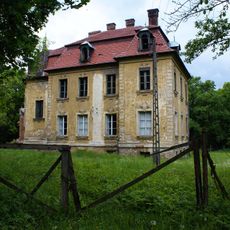
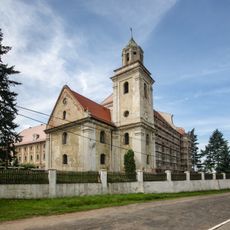
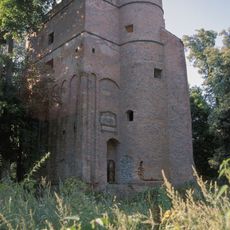
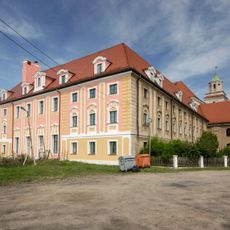
Pałac w Żmigrodzie is a palace built in 1656–1658 and rebuilt in 1762–1765 to a design by Carl Gotthard Langhans. Its front has a projecting bay crowned by a semicircular pediment, beneath which sits a cartouche with the von Hatzfeldt coat of arms. The brick residential tower bears a panel with the von Kurzbach and Maltzahn coats of arms, a motto and the date 1560.
A castle stood here by the 13th century, and a stone building followed in the mid-14th century. In 1641 Emperor Ferdinand III granted the estate to Melchior von Hatzfeld; his heir Hermann had the palace built between 1655 and 1660. Carl Gotthard Langhans later extended the south wing westward, following Krzysztof Hackner's earlier design.
The palace's front elevation carries a cartouche with the von Hatzfeldt coat of arms, whose seven fields record family properties: Trachenberg, Gleichen, Silesia, Wildenburg and Rosenberg. The brick residential tower bears a panel with the von Kurzbach and Maltzahn arms, a motto and the date 1560. The palace is listed on Poland's cultural heritage register.
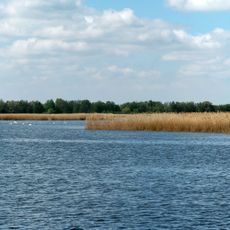
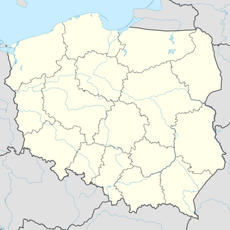
The palace stands in Żmigród on the Barycz and Sąsiecznica rivers, in the Trzebnica district of Lower Silesia. It is a registered monument, so it is viewed from outside; the palace complex also takes in the surrounding park.
The front risalit is topped by a semicircular pediment holding a cartouche with the von Hatzfeldt coat of arms. Its seven fields record family properties: a black double wall anchor on gold at the centre, plus a crowned double eagle, a crowned lion, the Silesian eagle, three roses, a single rose and a chequerboard.
The community of curious travelers
AroundUs brings together thousands of curated places, local tips, and hidden gems, enriched daily by 94,700 contributors worldwide.