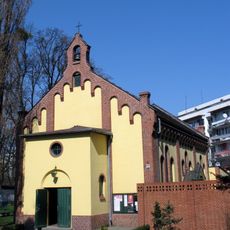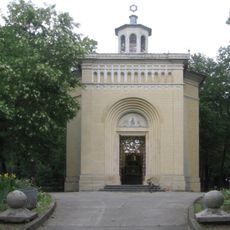
Osobowicki Cemetery Chapel, Modern chapel in Osobowicki Cemetery, Wrocław, Poland.
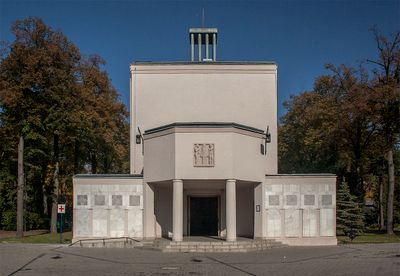
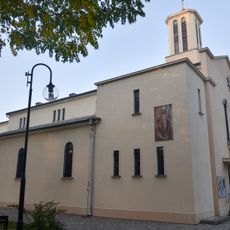
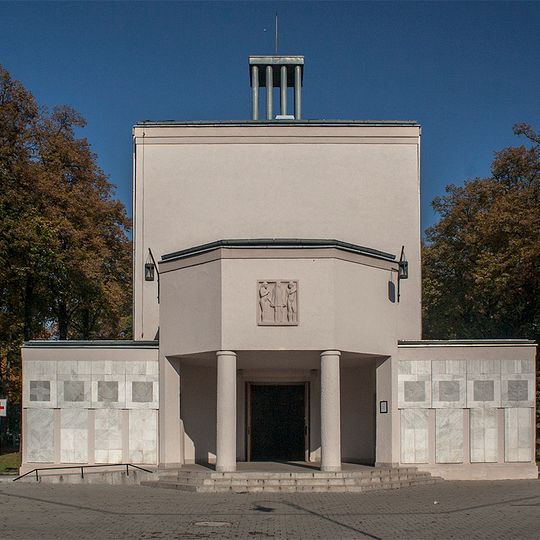
The Osobowicki Cemetery Chapel was built in 1920–21 to a design by Max Berg, with Albert Kempter assisting and interior work by Hans Leistikow and sculptor Alfred Vocke. It consists of linked cubic volumes: a rectangular main nave with an openwork lantern of round columns under a flat roof, a westibule on two round columns, and a lower single-storey surround holding side aisles and mortuary rooms. The front bears Alfred Vocke's relief of a veiled personification of Death leading a naked man and woman by the hand.
Max Berg, one of Wrocław's leading architects in the early 20th century, designed this chapel during the city's wave of modern building. It emerged at a time when architecture was shifting clearly from traditional styles to new forms.
The chapel shows how modern design merged with religious spaces, with clean forms structuring the place for ceremonies and mourning. Visitors experience a different kind of sacred architecture that stands apart from traditional churches.
The chapel stands mid-way along the cemetery's main avenue running south to north, in the far western section; the main gate and Hugo Althoff's cubic administration buildings mark the avenue's southern end. The building serves as both chapel and mortuary, so funeral services may be in progress. It was entered in the heritage register in 2010.
The chapel was one of the few religious buildings of its time to consistently use modernist elements, even though religious architecture typically kept traditional forms. This bold choice made it a notable example of daring to break established conventions.
The community of curious travelers
AroundUs brings together thousands of curated places, local tips, and hidden gems, enriched daily by 94,544 contributors worldwide.