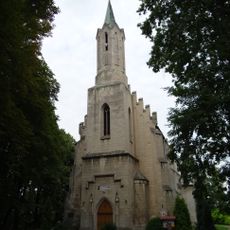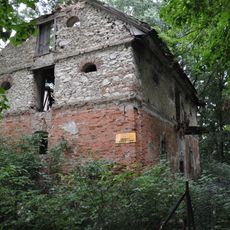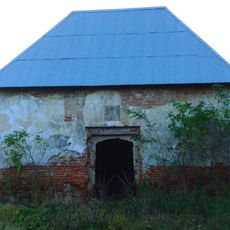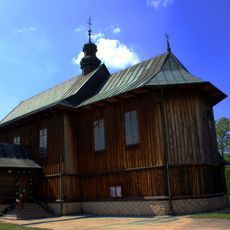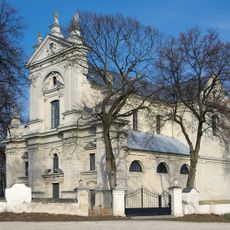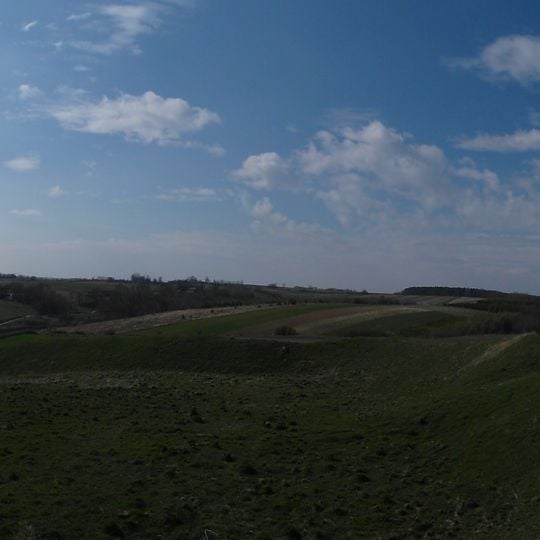
Stradów Gord, Archaeological museum in Stradów, Poland.
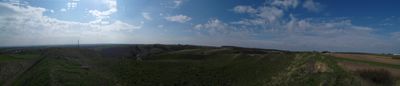
Stradów Gord is an open-air archaeological museum on a hilltop in the Świętokrzyskie region. The site displays the remains of a fortified settlement with ramparts, residential areas, and burial grounds from the early medieval period.
The gord arose in the 10th century on the site of an earlier undefended settlement, possibly linked to the Vistulan state, and later functioned under the Piast state. Its ramparts were built from the mid-10th century and the Barzyńskie suburbium rampart is dated to about 898–913. The stronghold burned in the mid-11th century, under Casimir the Restorer or Bolesław the Bold, and Wiślica, some 15 km away, took over its role.
The site's name is not recorded as "Gord": the Polish sources call it a grodzisko, the term for an early medieval stronghold. The complex consists of the main pentagonal fort, Zamczysko, and three subsidiary settlements: Barzyńskie, Mieścisko and Waliki. The rampart of Barzyńskie has been dated to about 898–913, and the whole complex covered roughly 25 hectares.
The site is easy to explore on foot from the elevated vantage point. On clear days, visitors can enjoy far-reaching views of the surrounding landscape, including distant mountain ranges in favorable conditions.
The rampart of the Barzyńskie outer bailey has been dated to around 898–913, making it older than the main stronghold, which functioned from the mid-10th century. Archaeologist Stefan Nosek of the Kraków branch of IHKM PAN led excavations here from 1956 to 1963. On clear days the Beskids are visible from the top of the ramparts.
The community of curious travelers
AroundUs brings together thousands of curated places, local tips, and hidden gems, enriched daily by 94,701 contributors worldwide.