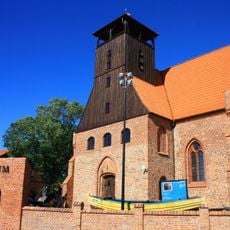
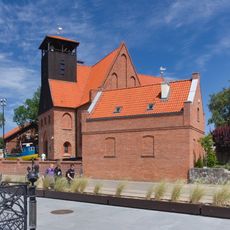
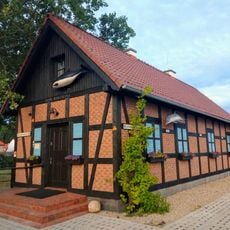
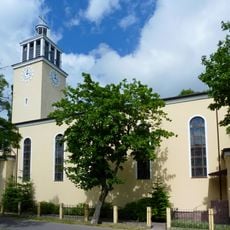
Station maritime de l'institut océanographique de l'université de Gdańsk, Research facility in Hel, Poland.
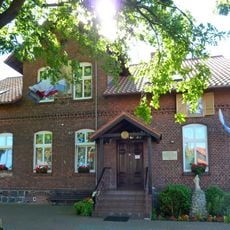
The Marine Station of the Institute of Oceanography of the University of Gdańsk in Hel consists of an education building with a lecture room and breeding pools, a laboratory and administration building, and a seal sanctuary (fokarium) that draws visitors. The station has its own facilities since 1992, after eight years of construction.
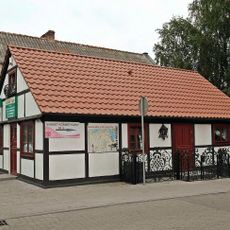
The station began in 1977 as the Oceanographic Field Laboratory, later renamed the Marine Field Laboratory, and first occupied rooms of a former "Koga" fish smokehouse. After eight years of construction, it moved into its own buildings in 1992 and was transformed by the University of Gdańsk Senate into the Marine Station of the Institute of Oceanography. It is the second oceanographic research facility in Hel's history, after the 1920s Marine Fisheries Laboratory led by Mieczysław Bogucki.
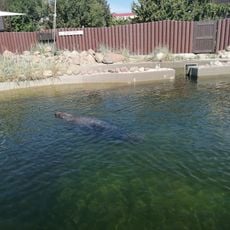
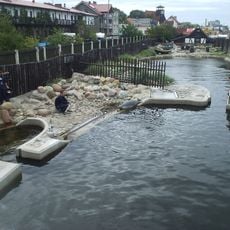
The station's fokarium, a seal enclosure, is its best-known feature and draws visitors to Hel. The facility is the only one of its kind in Poland and serves as the country's centre for research on marine mammals of the Baltic. Its staff prepare an experimental breeding and reintroduction of the grey seal into the Gulf of Gdańsk.
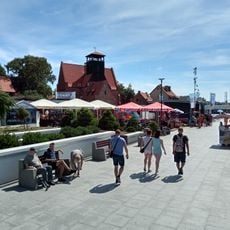
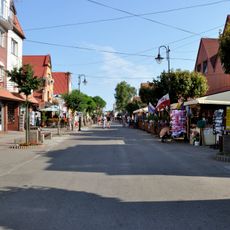
The location is in Hel, a small coastal town on a peninsula, and is relatively easy to find if you follow local signs toward the harbor. Before visiting, check if the facility is open to visitors since it primarily operates as a working research center.
The station is the only facility of its kind in Poland and serves as the Polish centre for research on marine mammals in Baltic territorial waters. Its work on grey seals aims at experimental breeding and restoring the species to the Gulf of Gdańsk. Its co-founder and long-time director was Prof. Krzysztof Skóra.
The community of curious travelers
AroundUs brings together thousands of curated places, local tips, and hidden gems, enriched daily by 94,700 contributors worldwide.