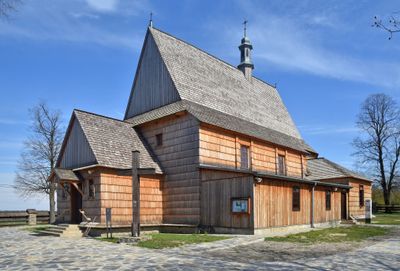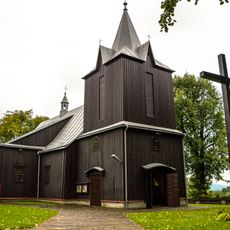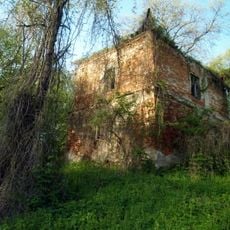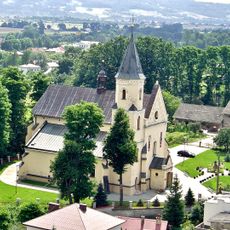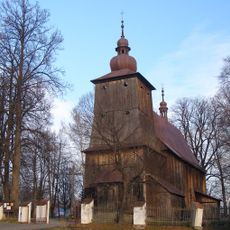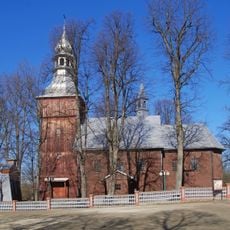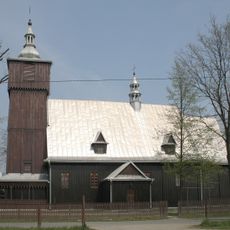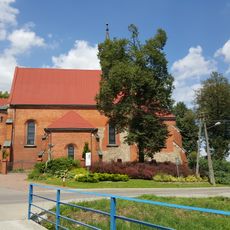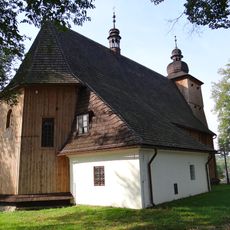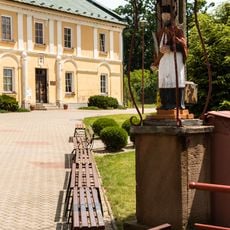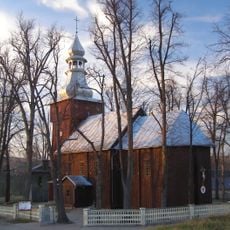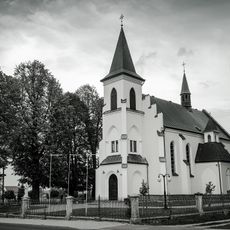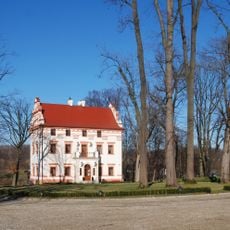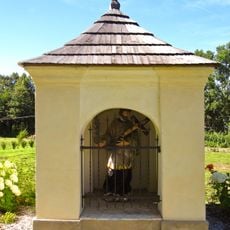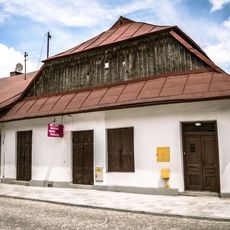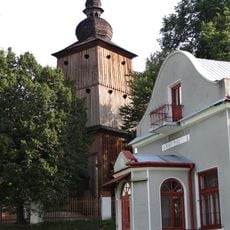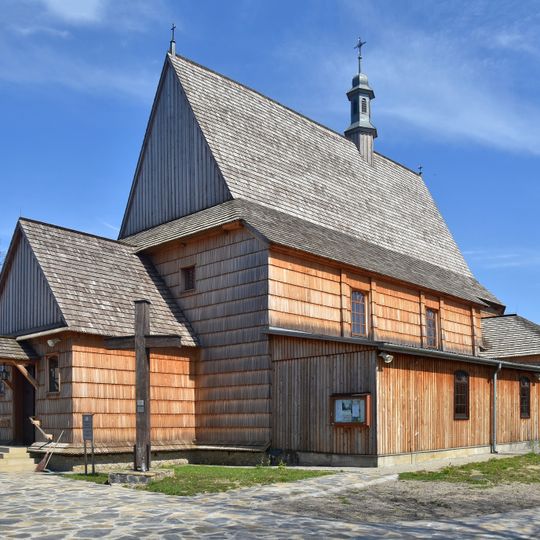
Holy Trinity church in Machowa, Wooden church in Machowa, Poland.
The Holy Trinity Church in Machowa is a wooden log-construction church built in 1778, oriented east-west and divided into a narrower three-sided chancel and a wider nave with a front porch and a south annex called the John Paul II Hall. A sacristy stands north of the chancel and a chapel south of it. The walls are clad in shingles, and the gable roof, covered in wooden shingles since the 2012–2014 restoration, carries a bell turret with a lantern and sheet-metal cupola.
The church was built in 1778 as a court chapel funded by Maciej Niemyski, then owner of the village. Bishop Florian Amand Janowski consecrated it in 1791. From 1889 it served as an auxiliary church of the Łęki Górne parish, and Bishop Leon Wałęga erected it as an independent parish in 1925. It was restored after war damage in 1944 and again in 1959–1962, when annexes were added on the south side.
The church is dedicated to the Holy Trinity, and its interior walls carry ornamental polychromy painted in 1906. In the crypt beneath the presbytery lies Henrietta Ewa Ankwiczówna, buried in 1879, remembered as the youthful love of poet Adam Mickiewicz and addressee of his poems "Do mego Cziczerona" and "Do Henrietty".
The church stands in Machowa, in the Subcarpathian region, on the road through the village. It is an active parish church, so visits are best kept outside Mass times. The wooden walls and shingle roof are visible from the churchyard, where the 20th-century belfry with its two 1954 bells stands to the east.
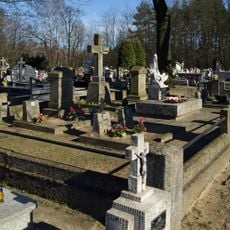
In the churchyard lies the grave of Otto Schimek, an Austrian soldier in the Wehrmacht shot for desertion during World War II; according to his sister's account, he also refused to carry out a death sentence on Polish civilians.
The community of curious travelers
AroundUs brings together thousands of curated places, local tips, and hidden gems, enriched daily by 94,081 contributors worldwide.