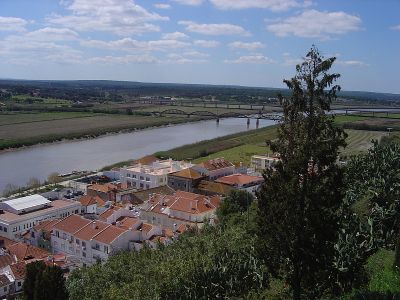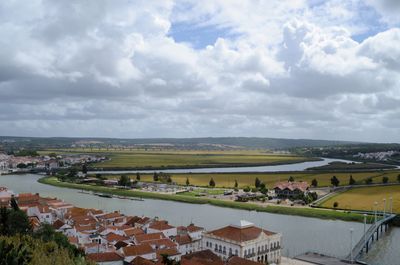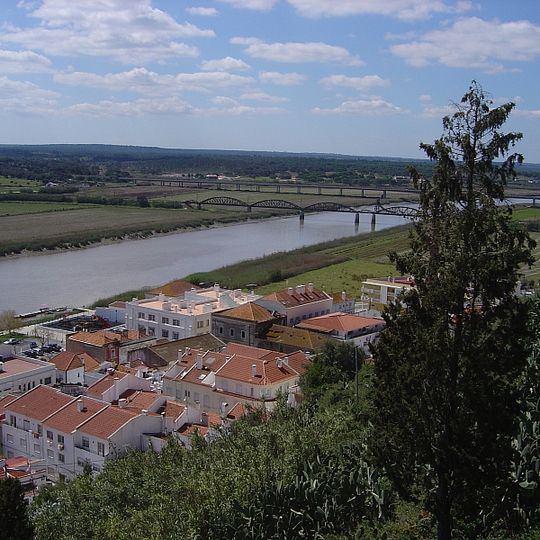
Sado River, River and estuary in Setúbal, Portugal.
The Sado is a river in the Setúbal region that flows from inland hills to the Atlantic Ocean, forming a broad estuary at its mouth. The waterway features extensive salt marshes, rice paddies, and reed beds that provide habitat for dolphins and many bird species.
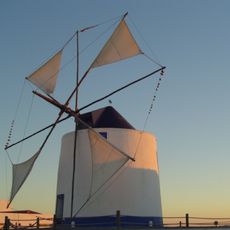
The river has shaped human settlement in the region since ancient times, when Roman communities first established salt production and water mills along its banks. These economic activities continued through the centuries and remain visible in the estuary's landscape today.
The estuary remains a place where locals continue salt production and fishing using methods passed down through generations. Visitors can watch these traditional practices unfold along the water, seeing how communities have shaped their daily lives around the river.
Boat tours offer the best way to watch dolphins and bird populations; these depart from several locations including Setúbal and Tróia. It is wise to visit early in the day, since wildlife is most active in the morning and late afternoon hours.
The water flows unusually northward, making it an exception among major Portuguese rivers. This rare flow direction influences the dynamics of the entire ecosystem and makes it a notable geographic feature.
The community of curious travelers
AroundUs brings together thousands of curated places, local tips, and hidden gems, enriched daily by 91,438 contributors worldwide.