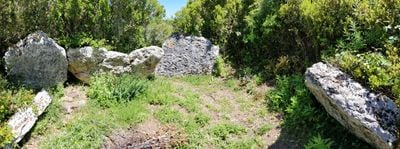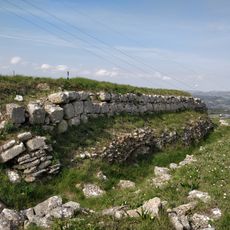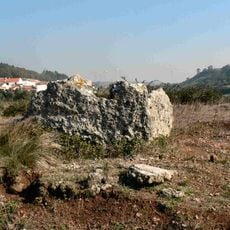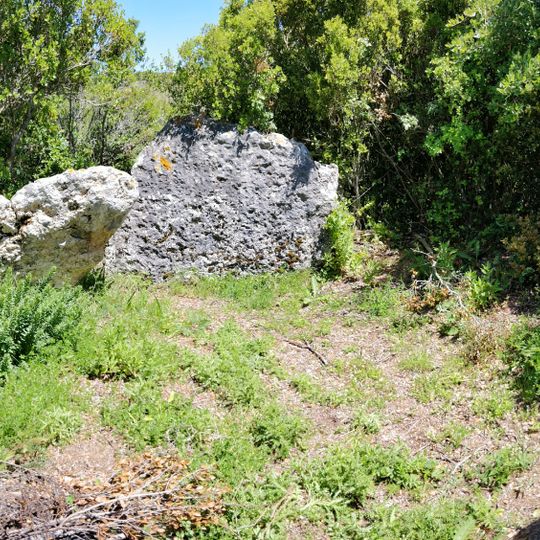
Anta da Toupeira, Neolithic dolmen in Lousa, Portugal.
Anta da Toupeira is a Neolithic burial mound near Lousa with a polygonal chamber made of five limestone slabs. The structure measures approximately 5.5 meters long and 5 meters wide, standing about 2 meters tall.
The structure dates to the Neolithic period and was first examined by German archaeologists in the early 1940s. Additional excavations took place in 1959, revealing more about prehistoric burial practices of the region.
The chamber held artifacts including a cylindrical idol and copper tools, now kept at the Geological Museum in Lisbon. These objects tell us about daily life and beliefs in ancient times.
The archaeological site is located about 100 meters south of the Cave of Salemas and remains open to visitors. You can walk around the remains and observe the structure up close to understand prehistoric burial customs.
Unlike similar structures in the region, this one lacks the typical entrance corridor, suggesting a different construction approach. This makes it a notable example of how burial architecture varied among ancient communities.
The community of curious travelers
AroundUs brings together thousands of curated places, local tips, and hidden gems, enriched daily by 92,309 contributors worldwide.