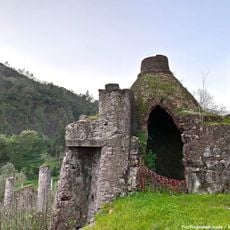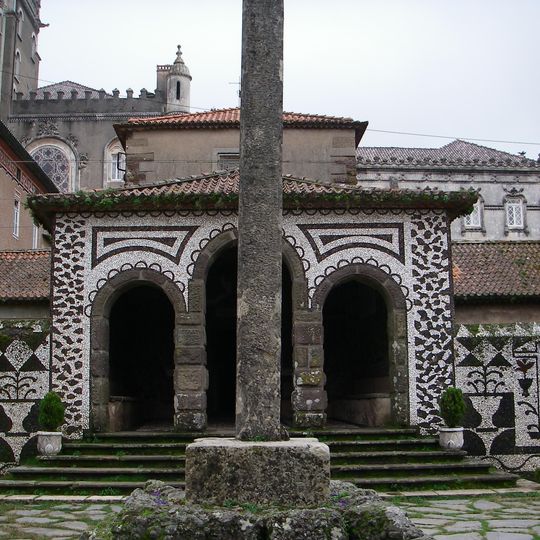
Convento de Santa Cruz do Buçaco, 17th-century Carmelite convent in Luso, Portugal.
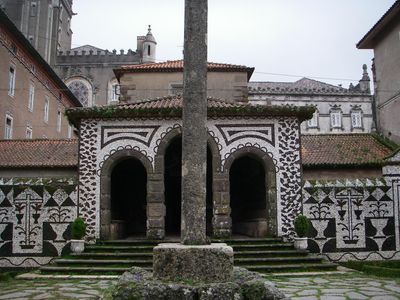
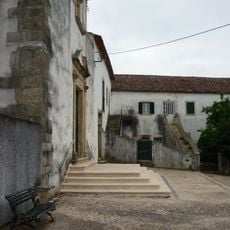
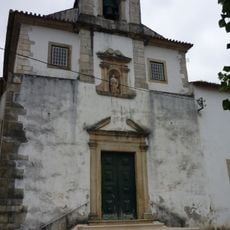
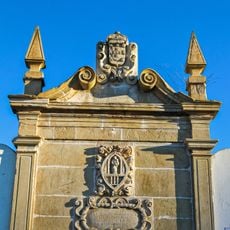
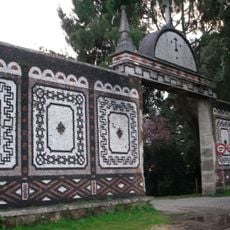
The Convento de Santa Cruz do Buçaco is a Carmelite convent from the 17th century built with white quartz walls marked by coal tar inlay, cork ceilings, and stone-paved corridors. Eleven separate shrines dot the grounds, each connected by walking paths that guide visitors through the structures.
The Barefoot Carmelites received the land from the Bishop of Coimbra in 1628 and began construction by building a surrounding wall to protect their property. The monastery developed over decades as a monastic retreat within the forest until it became a notable religious center.
The Barefoot Carmelites built this place as a retreat for prayer and contemplation, and their religious artworks remain visible throughout the rooms and shrines. The carved nativity scene and statues of biblical figures reflect the spiritual purpose that drew monks here centuries ago.
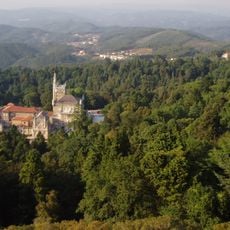
The convent sits within the Buçaco Forest and can be explored on foot via marked paths that connect the different shrines and buildings. Walking at a comfortable pace allows visitors to move between the various structures and surrounding woodland areas.
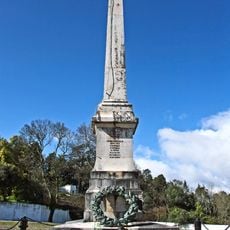
After his victory at the Battle of Bussaco in 1810, the British military commander Wellington chose this convent as his final resting place. This unexpected connection between a soldier and a monastic retreat highlights an unusual intersection of military and religious history.
The community of curious travelers
AroundUs brings together thousands of curated places, local tips, and hidden gems, enriched daily by 90,753 contributors worldwide.