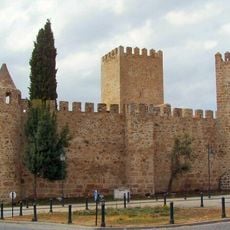
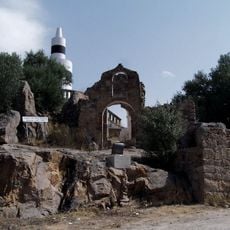
Ponte de Vila Formosa, Roman bridge in Alter do Chão, Portugal.
Ponte de Vila Formosa is a Roman bridge over the Seda stream with six round arches, each 8.95 metres wide and made of 33 voussoirs, resting on stone pillars. It measures about 116.5 metres long, 8.4 metres high and 6.7 metres wide, with portico-shaped eyeholes between the arches and a flat deck of large stone slabs. Since a new viaduct opened upstream in 2009, it no longer carries the EN 369 road.
Built at the end of the 1st century CE, the bridge carried the Roman road linking Lisbon to Mérida, capital of Lusitania, through Ponte de Sor and Alter do Chão. It was classified as a National Monument by decree on 16 June 1910. Restoration work took place in 1932–1934, and a new surface imitating Roman paving was laid in 1936; further repairs followed in 1939, 1963, 1980 and 2000.
The bridge displays Roman construction methods that remain visible and show how Roman engineers designed river crossings for the ancient world. Visitors can still observe the carefully shaped stones and crafted details that highlight the importance of this connection in ancient times.
The bridge is located in Portalegre district in the Alentejo region and is easily reached via the main road between the two towns. Visitors can explore the structure from the road or walk along the stream to view the arches and pillars from different angles.
The bridge features decorative gargoyles along its railings and a half-moon carved detail in one of the main arches. These ornamental elements are unusual for bridges of that era and show that Romans integrated beauty into practical structures.
The community of curious travelers
AroundUs brings together thousands of curated places, local tips, and hidden gems, enriched daily by 93,896 contributors worldwide.