Konstantin, Artillery fort in Kronstadt, Russia
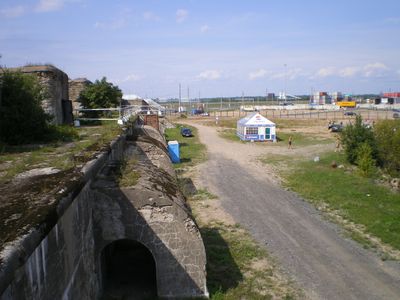
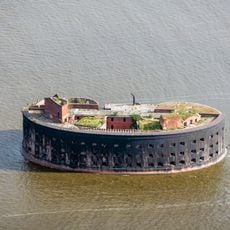
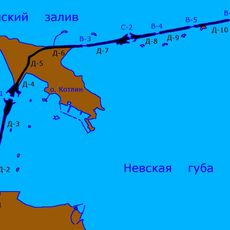
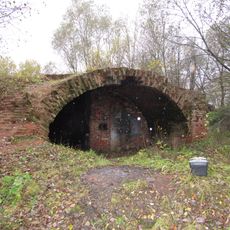
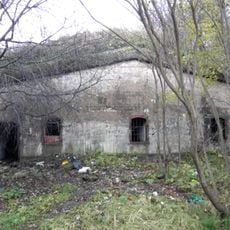
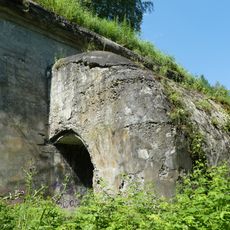
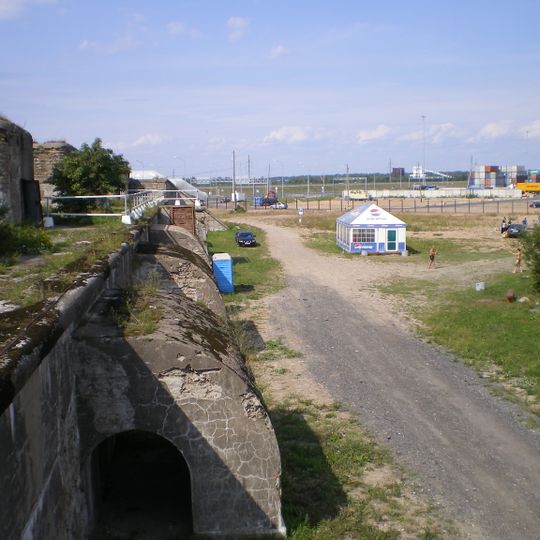
Konstantin Fort is a substantial stone fortification on Kotlin Island featuring thick defensive walls positioned along the waterfront. The structure incorporates artillery casemates and machine gun emplacements integrated throughout its design.
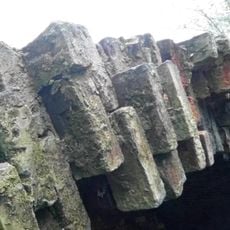
In 1807 Alexander I ordered extra fortification of Kronstadt ahead of a feared war with Britain; work began in 1808 on a two-tier pine-timber battery filled with sand and stone, the Double Southern Battery. In 1834 Nicholas I renamed it after his son Grand Duke Konstantin. The wooden works were replaced from 1858 by a granite escarp wall 4 m high and 300 m long, finished in 1861.
The fort represents a key element in Kronstadt's maritime defense identity, reflecting how the city served as Russia's protective barrier at sea. Visitors experience this legacy through the physical layout and defensive features that shaped regional security thinking for generations.
Access to interior areas is typically arranged through organized visits where trained guides explain the defensive layout and engineering. Wear sturdy footwear since stone surfaces can be uneven and the island location means weather exposure and wind are common.
In 1834 Nicholas I renamed the battery after his son Grand Duke Konstantin Nikolayevich, appointed general-admiral of the Russian fleet in 1831 at the age of four. The same year a caponier was built in the rear, forming an inner harbour open on two sides.
The community of curious travelers
AroundUs brings together thousands of curated places, local tips, and hidden gems, enriched daily by 93,896 contributors worldwide.