Church of the Nativity of John the Baptist in Kandalaksha, Orthodox church in Kandalaksha, Russia.
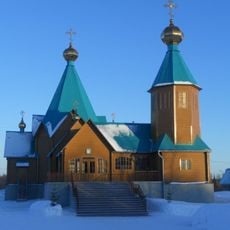
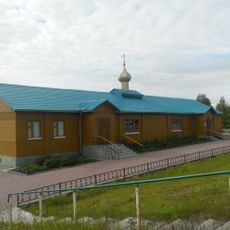
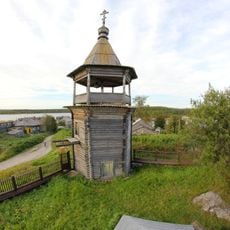
The Church of the Nativity of John the Baptist is a church building featuring wooden construction and onion-shaped domes, situated near the White Sea coast. The structure defines Kandalaksha's skyline with its characteristic shape and stands out prominently in the surrounding area.
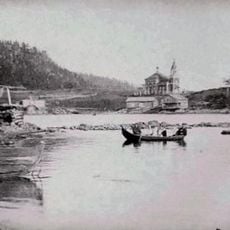
A church was built at the mouth of the Niva in 1526 and consecrated to the Nativity of John the Baptist; this spot, now Nizhnyaya Kandalaksha, is where the town began. A monastery was added in 1548. On 23 May 1589 Swedes plundered church, monastery and peasant yards, killing 450 people. Rebuilt in 1768–1801 and consecrated in 1801, the church stood until 1940, when it was closed during anti-religious campaigns. The present church was consecrated in 2005 near the historic site.
The church is dedicated to the Nativity of John the Baptist, a feast celebrated on 7 July. The original 1526 church gave its name to the surrounding area, now called Nizhnyaya Kandalaksha, where Kandalaksha began. The current building, consecrated in 2005, stands near the historic church site.
The current church, consecrated in 2005, stands near the historic church site in the Nizhnyaya Kandalaksha area, at the mouth of the Niva River on its right bank. The original 1526 church and its successor, rebuilt between 1768 and 1801, occupied this same locality, so the two positions are close but not identical. Visitors should look for the modern building near the old church place rather than expecting the 1801 structure, which was closed in 1940.
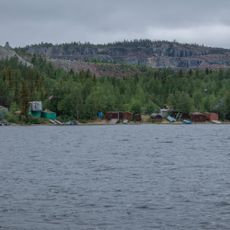
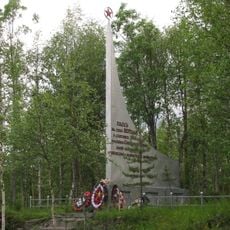
The first church here was built in 1526 at the mouth of the Niva, on its right bank, in the area now called Nizhnyaya Kandalaksha, where the town of Kandalaksha began. A monastery was added in 1548, and on 23 May 1589 Swedes plundered church, monastery and peasant yards, killing 450 people.
The community of curious travelers
AroundUs brings together thousands of curated places, local tips, and hidden gems, enriched daily by 93,797 contributors worldwide.