Kovdozero, reservoir in Murmansk Oblast, Russia
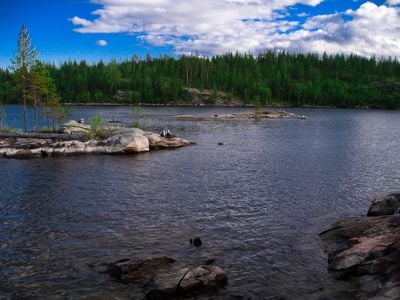
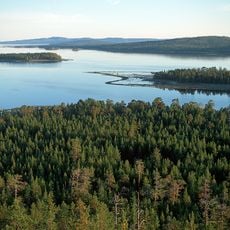
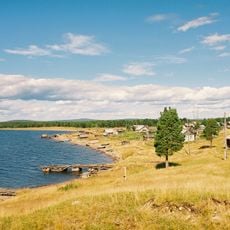
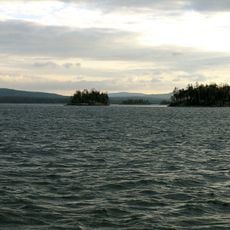
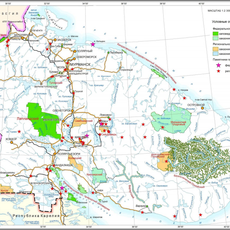
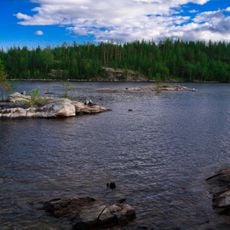
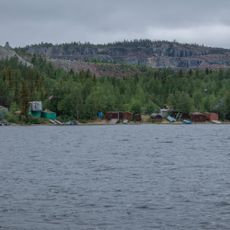
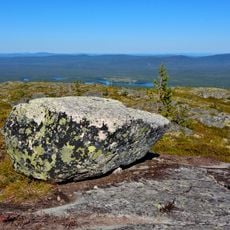
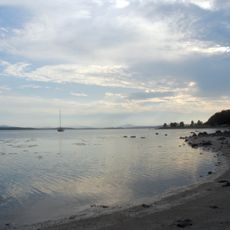
Kovdozero is a large reservoir in Murmansk Oblast with over 580 islands ranging from rocky outcrops to forested land masses. The shoreline is mostly low and wooded, featuring sandy coves and rocky sections, while surrounding forests contain spruce, pine, and birch trees.
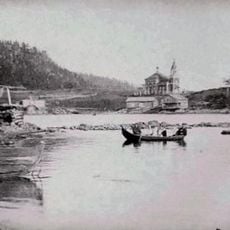
The lake's water level was raised in 1955 when it was used as a reservoir to support nearby facilities. This change significantly enlarged the water body and transformed the landscape for local communities who had long relied on it for fishing and travel.
The lake's Russian name Kovdozero is also rendered as Kovda and Kovdoozero. The Kovda river, which drains the lake to the White Sea, gives the reservoir its alternative name, Knyazhegubskoye, after the Knyazhegubskaya hydroelectric station whose dam raised the water level in 1955.
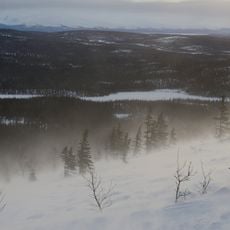
Visit in summer when ice has melted and boats can move on the water, or in winter for ice fishing on the frozen surface. Most visitors arrive by car since there are no direct public transportation routes, and should expect unpaved roads.
The lake's level rose 6.4 metres when the Kovda was dammed for the Knyazhegubskaya hydroelectric plant in 1955, lifting the water surface from 294 to 608 km² and submerging former shoreline. The reservoir now lies 37 metres above sea level, and the Kovda drains it to the White Sea.
The community of curious travelers
AroundUs brings together thousands of curated places, local tips, and hidden gems, enriched daily by 94,143 contributors worldwide.