Chokurcha, Paleolithic cave in Simferopol, Russia.
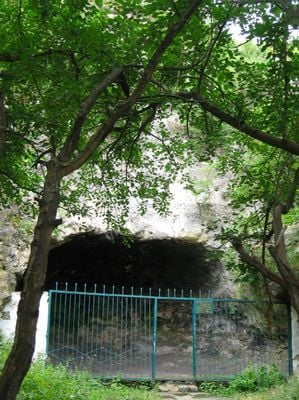
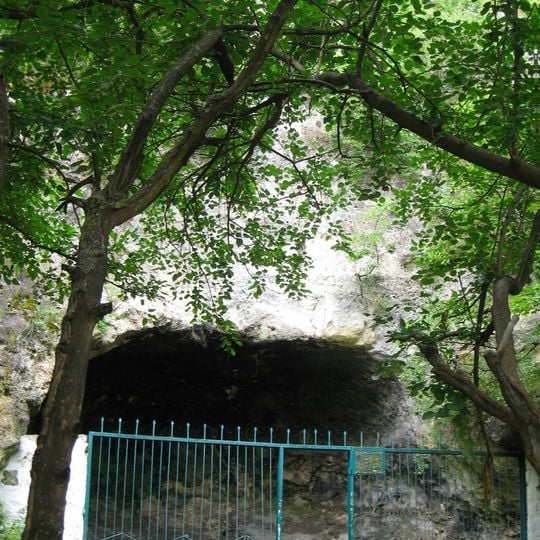
Chokurcha is a grotto on the left rocky bank of the Maly Salgir in Simferopol, facing north. Its opening is up to 7 m wide and 5 m deep, the remnant of a cave once about 15 m long whose front section collapsed. A turquoise metal fence with pointed bars stands across the entrance.
The cave was occupied by Neanderthals during the Middle Paleolithic period who used it as a seasonal shelter. Archaeological research indicates that multiple human groups visited and used this location over an extended timespan.
The name comes from the Crimean Tatar village of Çuqurça, from çuqur, "pit"; the village is now Luhove. In medieval times and into the modern era local people kept livestock in the grottoes above the Malyi Salgir. Carved into the vault under soot were a sun with rays about 0.5 m across, a mammoth and a fish, each roughly 0.5 m.
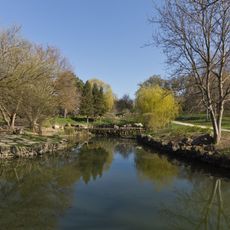
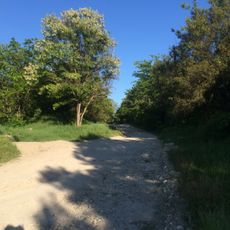
The grotto lies on the left rocky bank of the Maly Salgir, off Lugovaya Street; the approach passes through the grounds of the Simferopol district hospital and over the bridge across the river. The entrance faces north. In 2008 the city authorities fenced off the grotto, and a metal grille with pointed bars stands across the mouth.
Wear patterns on teeth of animal remains found here reveal specific information about the diet of prehistoric grazing animals in the region. This analysis helps researchers understand which animals were hunted by people and what the local ecosystem was like at that time.
The community of curious travelers
AroundUs brings together thousands of curated places, local tips, and hidden gems, enriched daily by 93,887 contributors worldwide.