Gagarino, Archaeological site in Lipetsk Oblast, Russia
Gagarino is an Upper Paleolithic open-air camp on the left bank of the Upper Don, at the northern edge of the village of Gagarino in Zadonsky District, Lipetsk Oblast. Excavations uncovered a dwelling sunk about 0.5 m into the ground, its walls and roof of branches covered with animal hides held down by large stones and bones. More than 11,000 finds were recorded, among them seven mammoth-ivory female figurines.
A peasant, I. V. Antonov, found mammoth bones at the site in summer 1924, and S. N. Zamyatnin excavated there in the 1920s. A. N. Rogachev and A. A. Velichko worked at Gagarino in 1955, followed by M. N. Grishchenko and L. M. Tarasov in the 1960s. The camp is dated to about 22,000 years ago, within the Gmelin interstadial (23,000–21,000 years ago).
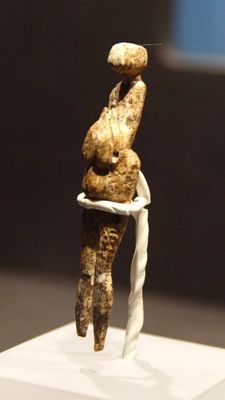
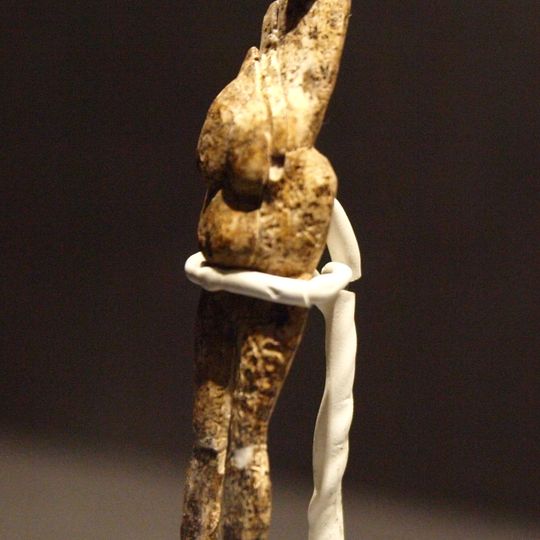
The site is known for seven Venus figurines carved from mammoth tusk, six with exaggerated breasts, belly and buttocks; one is a more realistic, notably tall female figure. One figurine, dated to 22,000 BC, shows a seated figure comparable to the Venus of Willendorf, and another wears a garment or ornament at the waist. An unfinished double figurine of a woman and a man(?) lies with heads touching.
The site is open to visitors, but it is wise to inquire with authorities beforehand since this is a protected area. A visit is best planned with a guided tour or local support to properly understand the excavations and findings.
Among the finds were seven Venus figurines cut from mammoth tusk; one, dated to about 22,000 BC, shows a seated figure comparable to the Venus of Willendorf, and another carries a garment or ornament around the waist. A further piece is an unfinished double figurine of a woman and a man(?) lying stretched out head to head.
The community of curious travelers
AroundUs brings together thousands of curated places, local tips, and hidden gems, enriched daily by 94,706 contributors worldwide.