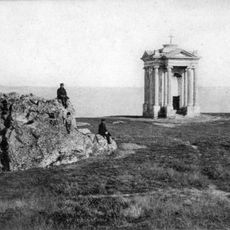
Royal Kurgan, Archaeological burial site in Kerch, Ukraine.
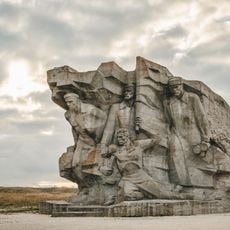
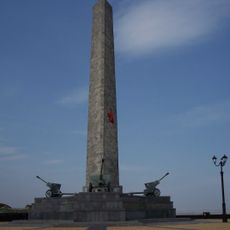
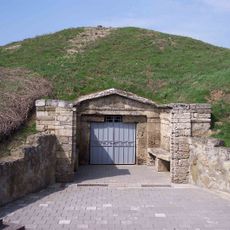
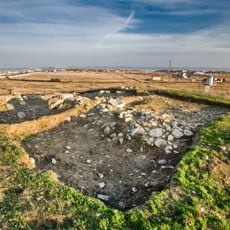
The Royal Kurgan is a 4th-century BC burial mound about 5 km northeast of Kerch, near the Adzhimushkay quarry memorial. Its earthen mound rises almost 20 m and has a base perimeter of about 250 m. Inside, a 37 m long, 2.80 m wide dromos of yellowish limestone blocks leads to a square burial chamber (4.39 by 4.35 m) that rises 8.84 m into a corbelled false vault of 12 concentric rings.
Built in the second half of the 4th century BC, the kurgan is attributed to a ruler of the Spartocid dynasty, possibly Perisades I (349/348–310/309 BC) or Leukon of Bosporus. It was opened during excavations in 1833–1837, when only remnants of a wooden sarcophagus were found, the tomb having been robbed in antiquity. In the 3rd–4th centuries AD early Christians used the chambers as a sanctuary, leaving graffiti crosses and the inscription Κοσμάε.
The kurgan's name comes from its presumed royal owner, a ruler of the Spartocid dynasty of the Bosporan Kingdom. In the 3rd and 4th centuries AD Christians used the tomb as a cult site, carving crosses and religious graffiti on the walls of the chamber and dromos; a single Greek inscription, "Kosmae", survives on the upper right wall of the passage.
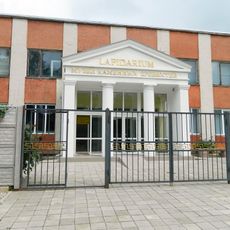
The kurgan lies about 5 km northeast of Kerch city centre, next to the Adzhimushkay quarry memorial. A lapidarium inside the enclosure displays pedestals, grave stelae and sarcophagi. The dromos is 37 m long and the chamber 8.84 m high, so allow time to walk through both.
The walls of the dromos and burial chamber still hold the sockets where the builders' scaffolding beams were set, and the blocks were fitted only on the face, their backs left rough in a technique called anathyrosis. The stone came from the nearby Adzhimushkay limestone deposit, quarried in the open air.
The community of curious travelers
AroundUs brings together thousands of curated places, local tips, and hidden gems, enriched daily by 93,358 contributors worldwide.