Baishevo astana, Historic mausoleum in Bayış, Russia
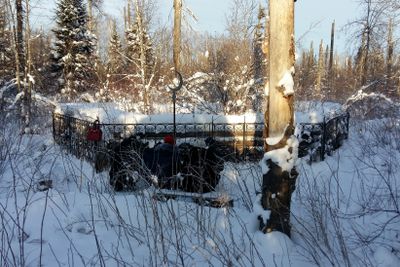
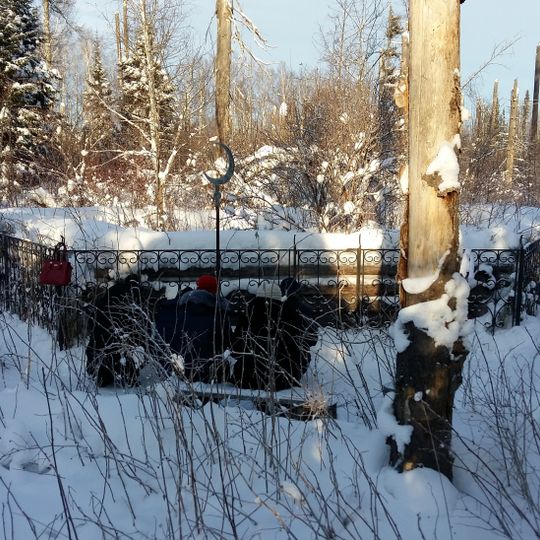
Baishevo astana is a hexagonal pine log frame 6 m long on each side and 1.2 m high, standing on the edge of the village of Baishevskaya (Baishevo) in the Vagaysky District of Tyumen Oblast, on the right bank of the Irtysh. The interior is overgrown with shrubs and grass, and a metal pole with a silver-painted crescent stands about 1 m from its south-eastern side. A wooden fence about 15 m across encloses the necropolis, with a bench and plank table inside.
The site was first recorded in 1734 by the explorer G.F. Miller, making it one of the earliest documented religious sites in the region. It has continued to serve the local Tatar population as a place of worship ever since that first written account.
Local Tatars call the whole cemetery an astana, not only the grave of Hakim-ata. The site is linked to the legend of 30 sacred burials recorded in Tatar manuscripts translated by N. F. Katanov in 1903. Both Muslims and Orthodox Christians visit, the latter suspecting that Yermak, buried according to Muslim custom, rests here as a Tatar saint.
The site lies in a rural area, so visitors should expect unpaved roads and very few facilities nearby. Visiting during drier months makes the journey easier and the surroundings more accessible.
According to local tradition, visiting the grave of Hakim Hazrat is believed to carry the same spiritual value as a pilgrimage to Mecca for those who cannot make that journey. This belief has brought people from across the wider region to this plain wooden structure for generations.
The community of curious travelers
AroundUs brings together thousands of curated places, local tips, and hidden gems, enriched daily by 94,705 contributors worldwide.