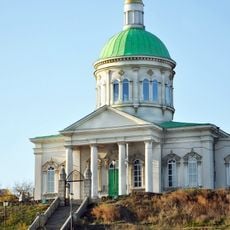
Iversky Convent, Russian Orthodox convent in Rostov-on-Don, Russia.
The Iversky Convent stands as a regional cultural heritage site featuring traditional Russian ecclesiastical architecture with onion domes, ornate iconography, and carefully maintained monastery grounds that include residential quarters for nuns and auxiliary buildings serving various spiritual and communal functions.
The convent began in 1903, when the Holy Synod approved a women's community named Troitse-Alekseevskaya on land donated by merchant Samuil Fyodorov near Nakhichevan-on-Don, about twelve versts from Rostov. Its church, consecrated to the Iveron Icon of the Mother of God, was completed in 1908. In 1919 Abbess Anastasia re-registered it as a farming cooperative; it was closed in 1929 and revived by Synod decree on 30 August 1991.
The convent is popularly called "Fyodorovsky" after merchant Samuil Fyodorov, its patron. Its main relic is an Iberian Mother of God icon bearing the inscription that it was painted and consecrated at the Russian St. Andrew Skete on Mount Athos, gifted by Metropolitan Vladimir in 1992. The lower church of St. Demetrius of Rostov holds icons with relics of Optina and Kiev Caves elders.
The convent lies about 12 versts from Rostov, near the former town of Nakhichevan-on-Don, and tours of the grounds are offered. A spring on the site became known for its healing properties and was later cleaned and landscaped. Visitors should dress and behave according to Orthodox custom.
During the threat of closure in 1919, Mother Anastasia creatively declared the religious community a farming cooperative complete with poultry yards, cattle enclosures, bakery, apiary, orchard, and fish breeding dams to avoid disbandment by Soviet authorities.
The community of curious travelers
AroundUs brings together thousands of curated places, local tips, and hidden gems, enriched daily by 93,161 contributors worldwide.