National Museum of the Udmurt Republic named after Kuzeby Gerd, National museum in Izhevsk, Udmurtia, Russia
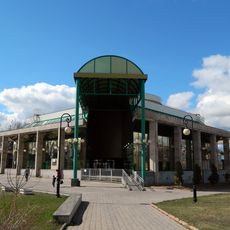
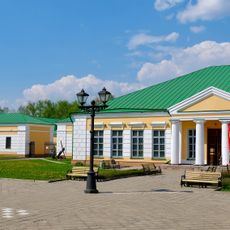
The National Museum of the Udmurt Republic named after Kuzebay Gerd occupies the early 19th-century Arsenal building on Kommunarov Street in Izhevsk, a P-shaped structure with its open side facing south. Its collection of up to 200,000 items includes cold steel and firearms, written sources, photographs, archaeology and ethnography, such as national costumes and peasant utensils. The permanent exhibition 'History and Culture of the Region from the 8th Millennium BCE to the 20th Century' fills four halls.
The museum opened in November 1920 as the Izhevsk Museum of Local Lore, founded and first directed part-time by A. M. Filippov, a veterinarian. In March 1926 Kuzebay Gerd was appointed director while on study leave from Moscow. It moved repeatedly — from a former German church to the Alexander Nevsky and St Michael cathedrals — before occupying the Arsenal building in 1970. It took its present name in 2000.
The museum is named after Kuzebi Gerd, an Udmurt poet and ethnographer who spent his life documenting the language and traditions of his people. His name on the building reflects how deeply this place is tied to local identity.
The museum sits in central Izhevsk and is easy to reach on foot or by public transport from most parts of the city. The collection is large, so setting aside at least half a day gives enough time to move through the main areas without rushing.
The museum's name honours Kuzebi Gerd, who directed it in 1926 while on study leave from the Eastern Research Institute in Moscow; the renaming came only on 24 April 2000. The building itself, the Arsenal, was designed by S. Ye. Dudin and built in 1823–1827 as a store for up to 75,000 small arms, with reference samples and tools kept in one of its chambers.
The community of curious travelers
AroundUs brings together thousands of curated places, local tips, and hidden gems, enriched daily by 93,156 contributors worldwide.