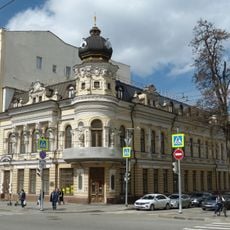
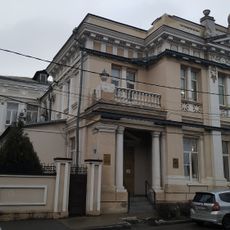
Palace of culture of railwaymen in Rostov-on-Don, Cultural palace for railway workers in Zhelenodorozhny District, Rostov-on-Don, Russia.
The Palace of Culture of Railwaymen is a building with grand halls, multiple performance spaces, and exhibition areas in Rostov-on-Don. The rooms are designed for events and art presentations, reflecting the connection to the railway industry.
In early 1924 the trade union of the Vladikavkaz railway's main workshops proposed a Palace of Labour named after Lenin, known as Lendvorets. The foundation was laid on 3 May 1924 on the site of Barricade No. 1, where railway workers resisted tsarist troops and Cossacks from 13 to 20 December 1905. Architects Mikhail Kondratyev, A. Markelov and Leonid Eberg designed it; it opened on 6 November 1927 and received its first visitors in 1928. Partly destroyed in the war, it was restored under Zoya Pochencova-Orlinskaya by 1957.
The palace is named LenDvorets after Lenin, for whom the railway workers' union proposed it in 1924. Its theatre and concert hall seats 700 and its banquet hall 300; more than thirty clubs and studios meet in the building, drawing about two thousand people. A railway glory museum opened here in 1960, followed in 1961 by a museum of history, religion and atheism.
The palace is located near bus lines and stops, with access during regular opening hours. Visitors should check in advance about ongoing events, as the space usage varies depending on the program schedule.
The palace stands on the site of Barricade No. 1, where railway workers held off tsarist troops and Cossacks from 13 to 20 December 1905. A memorial plaque names the workers who died there, among them Anatoly Sobino, Klara Reizman and Sara Leiter.
The community of curious travelers
AroundUs brings together thousands of curated places, local tips, and hidden gems, enriched daily by 94,475 contributors worldwide.