Trollhättan Falls, Waterfall system in Trollhättan Municipality, Sweden.
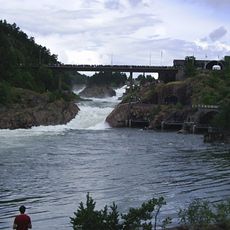
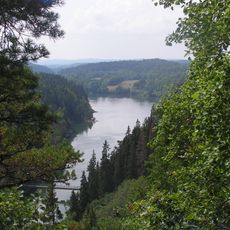
Trollhättan Falls is a former cataract area in the natural channel of the Göta River, with a total drop of 32 metres out of the river's 44-metre fall between Lake Vänern and the Kattegat. Its lowest section was known as Helvetesfallen (Hell Falls). The falls originally began near Stallbacka and ran through today's central Trollhättan, with the most spectacular drops in the Göta River canyon.
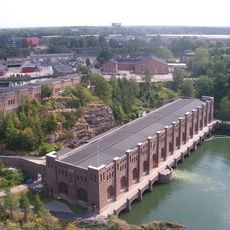
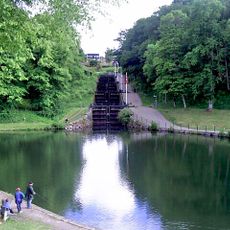
During the 1700s and 1800s, mills used the falling water to power local industry and attract workers to the growing town. Later, locks and power plants were built to control the water flow and harness its energy.
Water is released into the old riverbed during the Fallens dagar (Days of the Falls), held from mid-June to mid-August, with gates opened at 15:00 on Wednesdays to Sundays. The flow reaches about 300 cubic metres per second. The falls have drawn visitors since the early 19th century, when Toppöbron footbridge was built in 1836 for tourists.
Marked trails along the river provide several viewing spots where you can see the falls from different angles. Wear sturdy shoes as the paths have slopes and can be slippery, especially when water levels are high.
The water does not flow continuously over the falls but is regulated by power plants and released mainly during summer events. These scheduled releases of massive water volumes make each viewing a special occasion that visitors plan around.
The community of curious travelers
AroundUs brings together thousands of curated places, local tips, and hidden gems, enriched daily by 93,361 contributors worldwide.