Ekornavallen, Archaeological site in Falköping Municipality, Sweden.
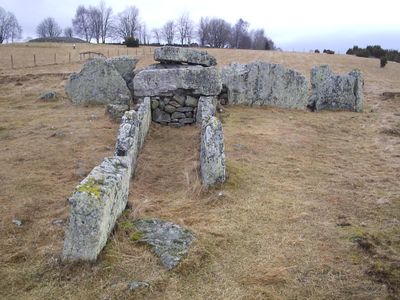
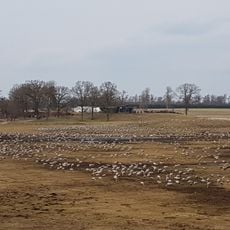
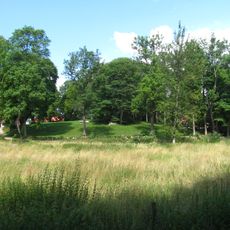
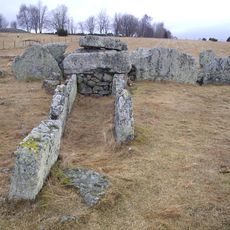
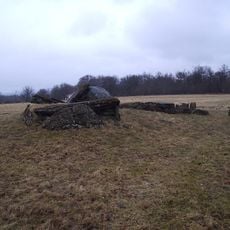
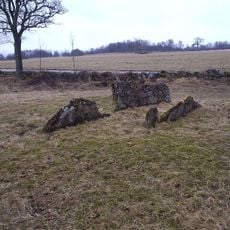
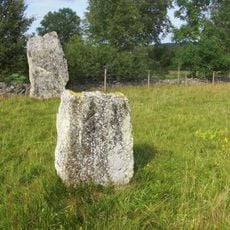
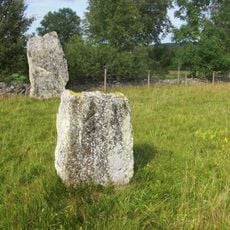
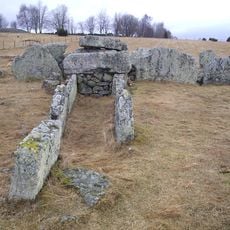
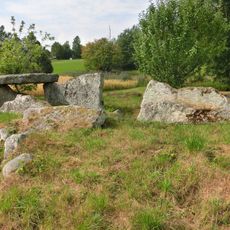
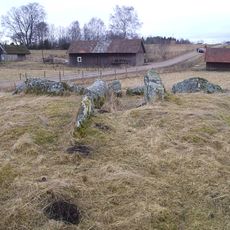
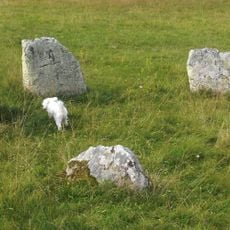
Ekornavallen is an archaeological site containing four passage graves, numerous cairns, twelve standing stones, and eight round stone settings spread across an open field. These different types of monuments span thousands of years and show how prehistoric communities marked important places for their dead.
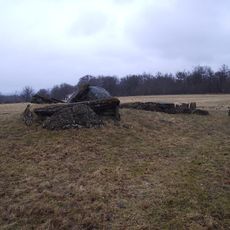
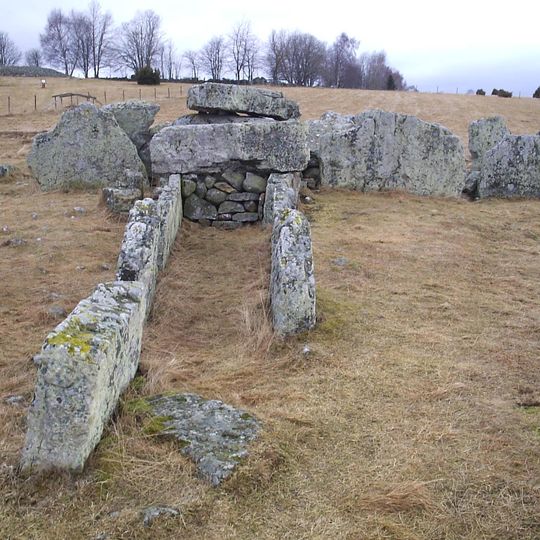
The field was used from the Neolithic through the Iron Age, roughly 4300 years, with four passage graves and a gallery grave from the Stone Age, two cairns from the Early Bronze Age, and seventeen stone settings, a triangular setting, two stone circles and eight standing stones from the Iron Age. The largest passage grave, Girommen, was restored in the 1940s by Gillis Olsson and Erik B. Lundberg, when a flint chisel, amber beads and potsherds were found. Until the 18th century the site lay on the outlying land of Hornborga village.
The Girommen passage grave shows how ancient communities honored their dead by including pottery, amber beads, and tools in the burial chambers. These burial gifts reveal what mattered most to people living here thousands of years ago.
The site lies beside the road between Falköping and Varnhem, 15 km north of Falköping. The monuments stand in open pasture with no shelter, so bring sturdy shoes and rain gear. The ground is uneven and can be muddy after rain.
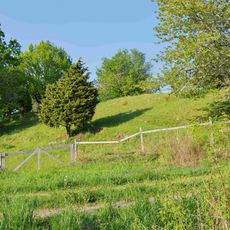
The largest cairn, over 20 metres across and 2 metres high, is ringed by large kerb stones. The site's name comes from the old word vall, meaning an open grazing field, and Ekornavallen served as outlying pasture for Hornborga village until the 18th century, so no farm stood here during the Iron Age.
The community of curious travelers
AroundUs brings together thousands of curated places, local tips, and hidden gems, enriched daily by 93,357 contributors worldwide.