Årsta Castle, Baroque castle in Haninge Municipality, Sweden.
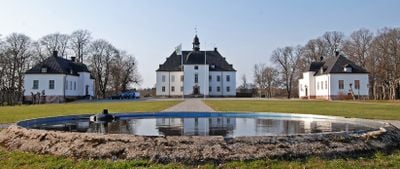
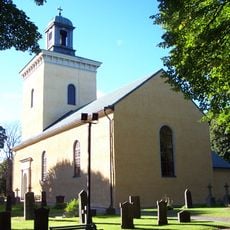
Årsta Castle is a Baroque manor house in Haninge Municipality, south of Stockholm. Its main building measures about 36 by 16 metres, with two storeys and a steep hipped roof. The white-plastered facade has a projecting entrance tower topped by a bell-shaped lantern and a clock face about 350 years old. Two free-standing wings flank the front courtyard.
The site was first recorded in the early 14th century, when it served as an administrative center for the Teutonic Order in Sweden. The current building was erected in the 17th century, replacing the earlier structures that had stood on the same ground.
The name Årsta comes from the Iron Age form meaning "the dwelling by the river", matching the burial field by the mouth of Husbyån about 500 metres south of the castle. Since 1969 Haninge Municipality has owned the castle and its two detached wings, and today the restaurant Årsta Slott Gastronomi and the society Årstasällskapet use the building. The main building is open to the public in summer and to booked groups in winter.
Because the castle operates as a restaurant and event venue, it is worth checking in advance whether it is open to visitors on a given day. The grounds around the building are generally accessible for a walk and offer a good view of the exterior.
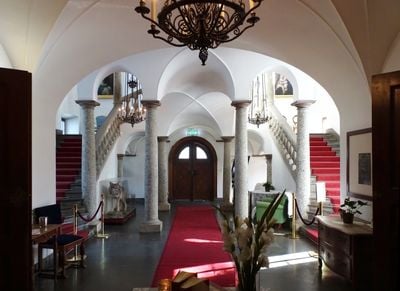
The staircase hall is unusually grand for a 17th-century manor, and a cross-section of it appears in Erik Dahlbergh's Suecia work. That has led some writers to suggest Dahlbergh as architect, but no architect or master builder is documented. The sandstone portal carries the alliance arms of Bielkenstierna and Natt och Dag.
The community of curious travelers
AroundUs brings together thousands of curated places, local tips, and hidden gems, enriched daily by 93,516 contributors worldwide.