Faxeholm, Medieval castle monument in Söderhamn, Sweden
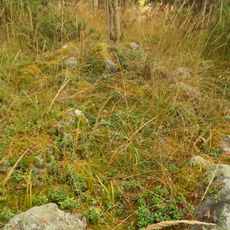
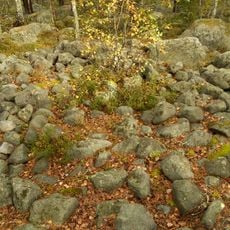
Faxeholm consists of medieval castle remains situated between the Söderhamnsån river and Faxeholmsgatan street. The stone foundations span approximately 41 meters in one direction and 35 meters in the other, revealing the basic layout of this former stronghold.
In 1398, the fortress was defended by nobleman Sven Sture and the Vitalienbröderna group against Queen Margareta's forces before surrendering. The stronghold was a key point in territorial disputes along the Gulf of Bothnia during the late 14th century.
The folk song "Faxehusvisan", also called "Delsbovisan", was recorded by Daniel Djurberg in the 17th century. It tells of the oppression of the Hälsingland people by the Danish bailiff at Faxeholm, the liberation war and the burning of the castle.
The archaeological site is open year-round with informational panels explaining the structure and its past. Good walking shoes are recommended as the terrain around the stone remains can be uneven in places.
The ballad Faxehusvisan, also called Delsbovisan, was written down by Daniel Djurberg in the 17th century. It tells of the oppression by the Danish bailiff at Faxeholm, the uprising and the burning of the castle in 1434.
The community of curious travelers
AroundUs brings together thousands of curated places, local tips, and hidden gems, enriched daily by 94,243 contributors worldwide.