Bräkne-Hoby Church, Neo-Romanesque church in Bräkne-Hoby, Sweden
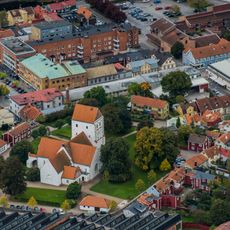
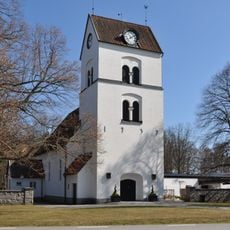
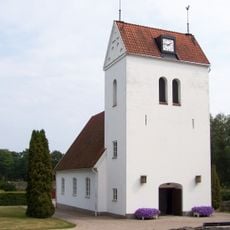
Bräkne-Hoby Church is a three-nave basilica with a west tower, built 1868–1872 to Helgo Zettervall's designs in Neo-Romanesque style. The walls are grey stone with brick in the tower and window surrounds, and the facades are plastered in yellow-white. A gilded cross, 2 metres wide and 3 metres high, tops the spire.
Built between 1868 and 1872 by architect Helgo Zettervall, the church replaced an earlier medieval stone building from the 12th century. The new construction happened during a period of church modernization across the region.
The 13th-century baptismal font is carved from sandstone quarried near Åhus, and its silver bowl was given in 1788 by Signe Nilsdotter Tiling, a boatman's widow from Hoby village, as its inscription records. Danish artist Paul Høm painted the murals, and a floor clock from 1831 stands in the church.
The church stands in the middle of Bräkne-Hoby, about 15 km west of central Ronneby, surrounded by its churchyard. The interior was thoroughly renovated in 1958–1959. Several graves lie in the entrance passage, and the painted wooden ceiling and 1634 pulpit are best seen from the nave.
The organ from 1872, built by Carl August Johansson, was later expanded to 20 stops but remains largely original. The church also safeguards a gold chalice from the 1700s as a special historical treasure.
The community of curious travelers
AroundUs brings together thousands of curated places, local tips, and hidden gems, enriched daily by 94,020 contributors worldwide.